Read how connection and everyday tools help Joy stay active and independent in a life lived on her terms.
Your life changes depending on your health and everything else, but if you look after yourself now, the transition won’t be so daunting.
— Christine, Joy's daughterYour day is full of routines, from making a cup of tea to watering the garden or calling a friend. Routines add structure to your day. They reflect what matters most to you, helping you feel certain about who you are and what you care about.
When you can no longer do the tasks and activities that make up your day, it can feel like losing parts of yourself. Getting older can change what you're able to do. But there are ways to adapt to these changes and continue living your life with meaning and purpose.
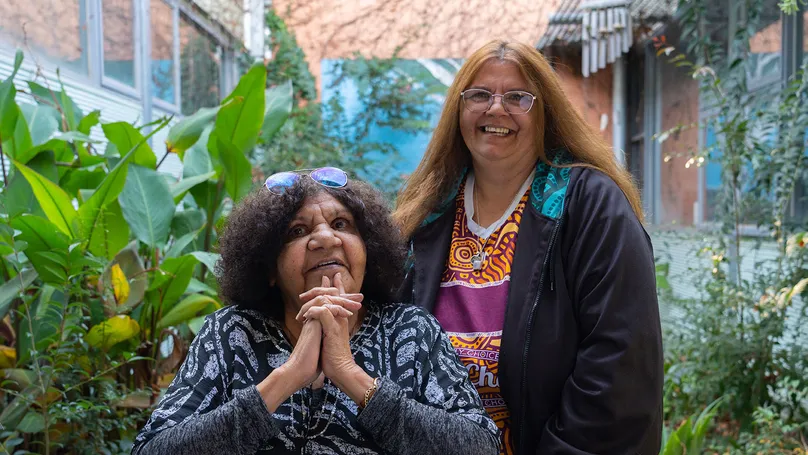
We spoke to Joy Ingram, a proud Gimuy Walubara Yidnji woman, who is doing just that.
Known for being a 'go-getter', full of energy and determined to make things happen, Joy felt lost when she left the workforce.
‘For mum, it’s been a big change in her life, because she’s always been independent. She’s always been able to just go, go, go – nonstop,’ said her daughter, Christine. ‘When she left work it was a massive change in terms of her whole, "Who am I?" You know, her whole wellbeing changed.'
Christine is a Team Leader and Outreach Worker at the Victorian Aboriginal Health Service. The change in Joy's sense of self was something Christine had seen many times in her work with older clients.
‘I think the challenge for them is that they’re getting older. They’ve got to think about, "Oh jeez, there are things that I can’t do on my own". And it’s actually asking for that support,’ Christine said.
It can be hard to ask for help, especially when you're used to doing everything by yourself. Asking for help doesn't mean you stop being independent. Instead, it can help you be independent in new ways by letting you focus your energy on the things that interest you. Here's an example:
If you don't enjoy cooking, alternate home-cooked meals with microwave ones. This can help you save your energy for activities that matter more to you, like gardening.
As time went on, Joy got used to accepting support. Not just from Christine, but also through the use of everyday tools.
Joy uses a walking stick to get around the house, and a walking frame when she's out and about. She also has some simple home modifications, including a handrail and chair in the shower.
Joy has a personal alarm, as well. This means she can call for help with the press of a button if anything happens while she's home alone.
These supports help make daily life easier, allowing Joy to continue living on her own. ‘In terms of what I know my mother used to do, she doesn’t have that same capacity. But she soldiers on as much as she can,’ Christine said.
With the right supports in place, seeing loved ones remains a big part of Joy’s life. ‘We’ve also got family in Far North Queensland, so we take mum home to Country and catch up,’ Christine said.
Spending time with family supports Joy in more ways than one, including helping her stay active. ‘Because we know if you’re isolated and your mobility is getting less and less, it’s not good for the rest of the body. So it’s just trying every day to do something to keep that energy and body moving,’ Christine said - a sentiment that Joy echoed:
‘You’ve just got to keep moving. Get up and rock and roll. Always. There’s nothing stopping me. You go forward, not backwards.’
Download Joy and Christine’s full story to read more about their healthy ageing journey:
Download the full storyChristine and Joy also helped create culturally grounded resources. They're designed to help other First Nations people access the support they need to age well.
LiveUp provides free information to help you make informed decisions about your health. This information is for general and educational purposes only, is not intended to provide a comprehensive guide, and does not replace medical advice. Everyone is different, so some of these tips may work better for you than others. You should use your own judgment and seek medical advice when applying this information to yourself, to determine if it is suitable in your circumstances. Your use of, or reliance on, this information is solely at your own risk. Independent Living Assessment Incorporated is not responsible or liable for any injury, loss, or damage caused as a result of your use of, or reliance on, this information.
You can print out the PDF and stick it to your fridge or file away the tips to revisit at a later time.

Did you enjoy this article? You may also like reading similar healthy ageing articles.
See all Social articlesYour feedback helps LiveUp to curate information that matters to you.