Do you find it hard to follow conversations or hear clearly in everyday settings? Here are some products that could help.
Addressing hearing loss can improve your health in surprising ways – supporting your memory, mood, and confidence.
Your hearing helps keep your brain active as you age. Listening to speech and taking part in conversations are complex mental exercises. They strengthen your thinking skills and support your long-term brain health.
If you have mild hearing loss, it’s worth exploring hearing support early. Here are a few options that might help, including over-the-counter (OTC) hearing aids.
LiveUp is a non-profit funded by the Health Department, so we don’t earn money from these suggestions. We’re not connected to any retailers or products in any way. Our goal is to help you find practical, cost-effective solutions that make everyday life easier.
What are OTC hearing aids?
Over the counter (OTC) hearing aids are hearing aids you can buy without a medical prescription. You can fit them to yourself. They’re usually more affordable than prescription options.
Do you experience mild to moderate hearing loss or tinnitus? OTC hearing aids may be a flexible, cost-effective starting point for support.
OTC hearing aids don’t replace devices that are prescribed and fitted by an audiologist. However, clinical studies show they can improve:
Did you find this article useful?
Your feedback helps LiveUp to curate information that matters to you.
You might also be interested in these resources
5 reasons to get your hearing checked for brain health
Learn how hearing and brain health are linked and how hearing checks support a healthy brain as you age.
Staying connected in a digital world: how older adults are learning new tech skills
Older people can use technology to stay in touch with family, friends, and community. In Rockingham, WA, a group called Switched On Seniors is helping them learn how.
You can buy some OTC hearing aids from pharmacies, online stores, or hearing providers. It’s a good idea to choose a trusted provider and ask questions to make sure the device is right for you.
Where to find other low-risk hearing support devices
The National Equipment Database is a great place to search for low-risk hearing and listening support tools.
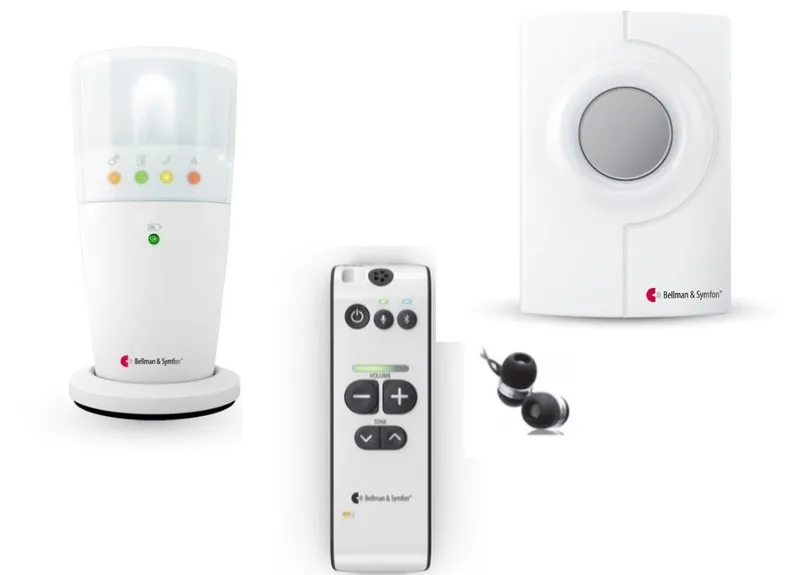
For example, some alerting and listening support systems can help people who have difficulty hearing the following:
Doorbells
Phones
Conversations
The Bellman Safe and Sound Packis one example. NED can connect you with suppliers of this product and other similar options.
Apple AirPods Pro 2: An alternative support option
Apple’s AirPods Pro 2 can be updated with a hearing assistive feature. While they’re not a replacement for hearing aids, they can provide entry-level support. If you already own them, the software update is free.
Speak to a healthcare professional for personalised advice about finding the right device for you. Audiology clinics offer hearing screenings for free, and they only take a few minutes.
You can also check trusted review sites like CHOICE for resources like this buying guide.
Need some help? You can always reach out to LiveUp for support with general healthy ageing information on 1800 951 971.
Goldstein, A., Wang, H., Niekerken, L. et al. A unified acoustic-to-speech-to-language embedding space captures the neural basis of natural language processing in everyday conversations. Nat Hum Behav 9, 1041–1055 (2025). https://doi.org/10.1038/s41562-025-02105-9
Golub, J. S., Brickman, A. M., Ciarleglio, A. J., Schupf, N., & Luchsinger, J. A. (2020). Association of Subclinical Hearing Loss With Cognitive Performance. JAMA otolaryngology-- head & neck surgery, 146(1), 57–67. https://doi.org/10.1001/jamaoto.2019.3375
Kim GY, Yun HJ, Jo M, Jo S, Cho YS, Moon IJ. (2024). Apple AirPods Pro as a hearing assistive device in patients with mild to moderate hearing loss. Yonsei Med J.65(10):596-601. doi:10.3349/ymj.2023.0375
Kirschen, R. M., & Leaver, A. M. (2024). Hearing function moderates age-related differences in brain morphometry in the HCP Aging cohort. Human Brain Mapping, 45(16), e70074. https://doi.org/10.1002/hbm.70074
Therapeutic Goods Administration (TGA). (2024 Dec 17, cited 2025 Jun 4). Apple Pty Ltd – Hearing aid, in-the-ear (ARTG ID 473488) [Internet]. Canberra (AU): Australian Government Department of Health. Therapeutic Goods Administration, Australian Register of Therapeutic Goods database.
Wang, H.-F., Zhang, W., Rolls, E. T., Li, Y., Wang, L., Ma, Y.-H., Kang, J., Feng, J., Yu, J.-T., & Cheng, W. (2022). Hearing impairment is associated with cognitive decline, brain atrophy and tau pathology. eBioMedicine, 86, 104336. https://doi.org/10.1016/j.ebiom.2022.104336
Wu, Y. H., Stangl, E., Branscome, K., Oleson, J., & Ricketts, T. (2025). Hearing Aid Service Models, Technology, and Patient Outcomes: A Randomized Clinical Trial. JAMA otolaryngology-- head & neck surgery, 151(7), 684–692. https://doi.org/10.1001/jamaoto.2025.1008
How to use this information
LiveUp provides free information to help you make informed decisions about your health. This information is for general and educational purposes only, is not intended to provide a comprehensive guide, and does not replace medical advice. Everyone is different, so some of these tips may work better for you than others. You should use your own judgment and seek medical advice when applying this information to yourself, to determine if it is suitable in your circumstances. Your use of, or reliance on, this information is solely at your own risk. Independent Living Assessment Incorporated is not responsible or liable for any injury, loss, or damage caused as a result of your use of, or reliance on, this information.
Download and print this article:
You can print out the PDF and stick it to your fridge or file away the tips to revisit at a later time.
Read more Memory articles
Did you enjoy this article? You may also like reading similar healthy ageing articles.