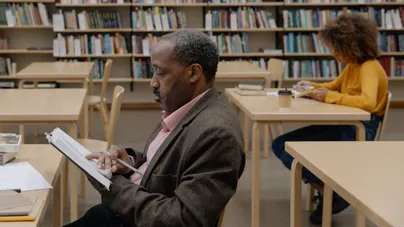
You can make avid reading part of your healthy ageing journey. Here are some reasons and ways to do it.
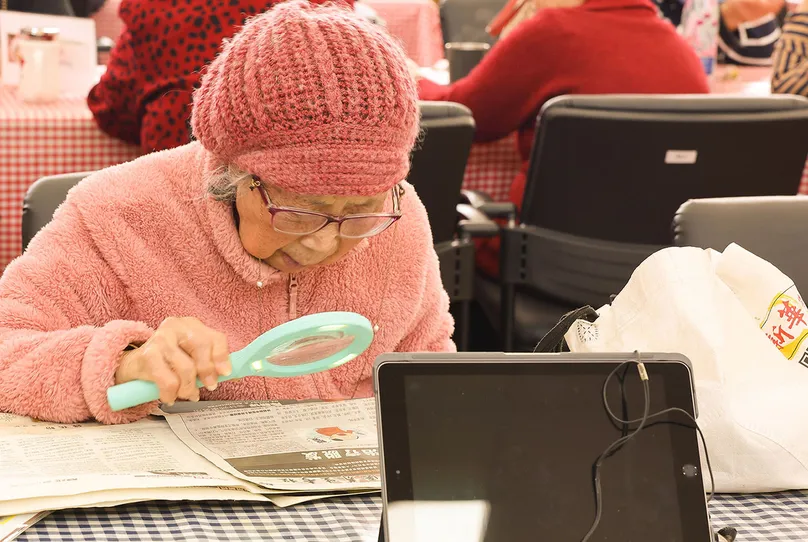
Reading is a beneficial hobby. It supports your brain, your mental health, and your social wellbeing.
But as you age, things like arthritis or changes in vision can make reading harder.
Even so, it’s still possible to keep reading as part of your healthy ageing journey. Here’s why it helps – plus some tips to make it easier.
Reading involves a complex neural network of activity. Though it can feel very calming, it's still an exercise for your brain. You can use it to keep your brain active and in good shape.
Taking some time to read each week is linked with slower decline in thinking skills as you age. It can also improve abilities like memory and language processing.
Books aren't the only way to read. Newspapers, magazines, or online articles can all help you keep thinking and learning. This supports your brain health, which supports your independence and overall health as you age.
Cognitive reserve is your brain’s 'stockpile' of thinking skills. You can build it over your lifetime. Activities that challenge your mind, like reading an engaging book, help strengthen this reserve. This makes your thinking skills more resilient to age or disease.
Just like you can train your muscles to get strong, you can train your brain for older age. You can start any time, but the earlier the better. Reading for leisure is a good way to begin.
Reading can help you relax and reduce stress. It fits well into a calming bedtime routine.
Older adults have also reported that reading supports their emotional health. It helps with things like:
You may bond with others over a shared interest in certain books. You could also meet new people at a local book club. This helps you stay connected with your community, which is important for good mental and overall health.
Looking after your eye health is one of the first things you can do to protect your reading ability. Remember to:
Do you have difficulty reading due to low vision or conditions such as dyslexia?
Some assistive products could make reading possible, easier, or more comfortable.
For example:
You can also borrow from the free library of Braille House. They can send braille books to you via free post, in bags with reversible address labels.
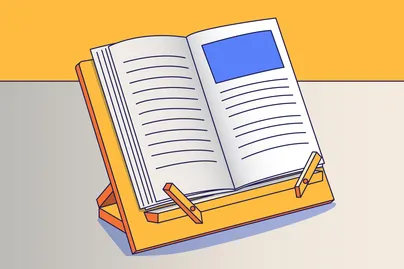
Need the option to read hands-free or with one hand?
Consider using book stands that will hold your page open for you.
There's also the option of listening to audiobooks. This is believed to trigger similar activity in the brain to what reading triggers, according to Brigid Magner (RMIT University).
Magner also points out the significance of spoken stories in Australia. Consider Songlines. This is a First Nations oral tradition, mapping the stars and land from ancient stories.
Spoken-word storytelling is a rich tradition. People have been doing it since long before print books existed.
Audiobooks are easy to access and fit into your daily routine. You can borrow them for free using the BorrowBox app through your local library. Just have your library card number and PIN ready.
You can listen while you:
This makes it easier to finish more books and enjoy stories in a flexible way.
Explore helpful products for craft activities to do while you readSome books may challenge your memory, but there are simple ways to help:
Talking about a book, especially in a book club, can also help you remember it. Discussing themes, meanings, or simply sharing your reactions helps your brain revisit and reinforce what you’ve read. Plus, it can make reading even more fun.
If you need more information, take the LiveUp quiz or get in touch with one of our helpful team on 1800 951 971.
Chang, Y.-H., Wu, I.-C., & Hsiung, C. A. (2021). Reading activity prevents long-term decline in cognitive function in older people: Evidence from a 14-year longitudinal study. International Psychogeriatrics, 33(1), 63-74. https://doi.org/10.1017/S1041610220000812
Currie, N. K., Wilkinson, K., & McGeown, S. (2025). Reading fiction and psychological well-being during older adulthood: Positive affect, connection and personal growth. Reading Research Quarterly. Advance online publication. https://doi.org/10.1002/rrq.605
Glynn-McDonald, R. Songlines. Common Ground. https://www.commonground.org.au/article/songlines
Magner, B. (2021). Yes, audiobooks count as 'real reading'. Here are 3 top titles to get you started. https://theconversation.com/yes-audiobooks-count-as-real-reading-here-are-3-top-titles-to-get-you-started-166097
Pegoraro, S., Facchin, A., Luchesa, F., Rolandi, E., Guaita, A., Arduino, L. S., & Daini, R. (2024). The Complexity of Reading Revealed by a Study with Healthy Older Adults. Brain Sciences, 14(3), 230. https://doi.org/10.3390/brainsci14030230
Stern, Y. (2022, September). What is cognitive reserve? Age UK. https://www.ageuk.org.uk/information-advice/health-wellbeing/mind-body/staying-sharp/thinking-skills-change-with-age/cognitive-reserve/
Stine-Morrow, E. A. L., McCall, G. S., Manavbasi, I., Ng, S., Llano, D. A., & Barbey, A. K. (2022). The Effects of Sustained Literacy Engagement on Cognition and Sentence Processing Among Older Adults. Frontiers in psychology, 13, 923795. https://doi.org/10.3389/fpsyg.2022.923795
LiveUp provides free information to help you make informed decisions about your health. This information is for general and educational purposes only, is not intended to provide a comprehensive guide, and does not replace medical advice. Everyone is different, so some of these tips may work better for you than others. You should use your own judgment and seek medical advice when applying this information to yourself, to determine if it is suitable in your circumstances. Your use of, or reliance on, this information is solely at your own risk. Independent Living Assessment Incorporated is not responsible or liable for any injury, loss, or damage caused as a result of your use of, or reliance on, this information.
You can print out the PDF and stick it to your fridge or file away the tips to revisit at a later time.

Did you enjoy this article? You may also like reading similar healthy ageing articles.
See all Memory articlesYour feedback helps LiveUp to curate information that matters to you.