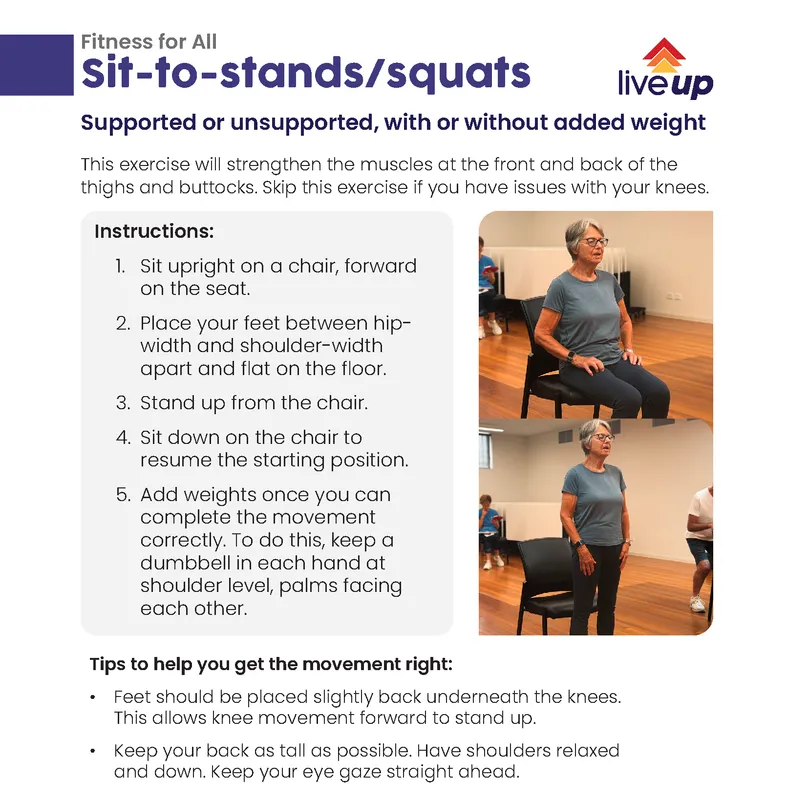
Exercise sheets
Be active, feel well, and stay independent with Fitness for All. Designed in collaboration with Kamilla Haufort, a healthy ageing consultant, these free online resources help you build strength and balance. Enjoy the benefits of regular movement today!
Hear from Pamela, David, Kate, Glennis, Hannah, and Peter about the benefits of fitness classes including:
Fitness for All is here to help you boost your strength and balance. The resources on this page include:
Each exercise includes step-by-step instructions, safety tips, and different ways you can try them.
You can follow along with this video to try out some balance challenges that are easy to do at home.
Scroll down to find free downloadable exercise sheets to keep or share with friends.
Next, you can use the videos below to progress through individual exercises at your own pace.
Exercise sheets
These individual exercise videos, taken from the long video above, are designed so you can choose the exercises your body needs to create your own at home strengthening routine.
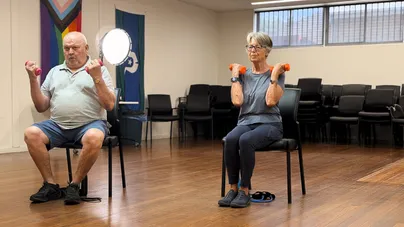
Practice biceps curls to help you lift shopping bags, carry small children, or open tight jars.
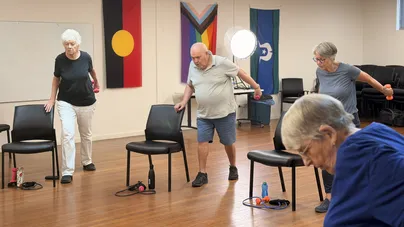
Strengthening your triceps helps you with reaching, brushing your teeth, and cleaning.
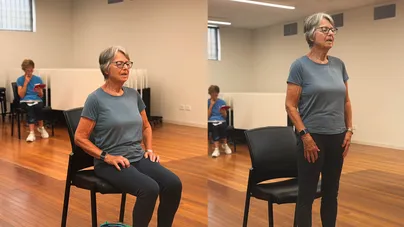
Sit-to-stand exercises help you climb the stairs, get up from a chair, and get out of bed.
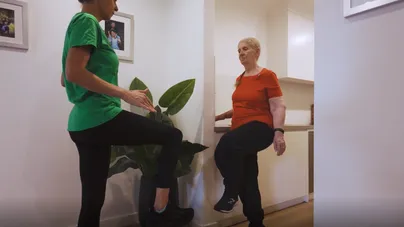
Strengthening your glutes and thighs helps you stand, walk, and climb the stairs.
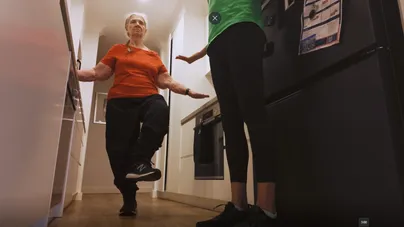
Practice tandem stances to improve your balance, increase ankle stability, and reduce risk of falls.
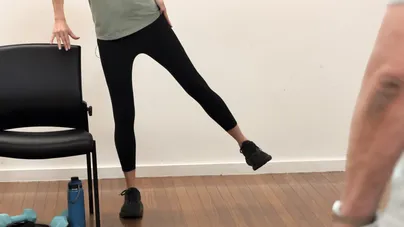
Sde leg raises improve your hip stability and balance and reduce strain on your knees and lower back.
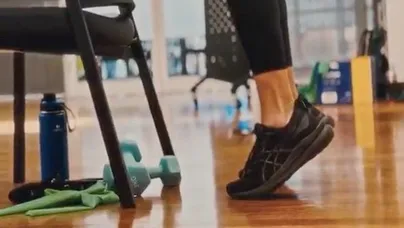
Try calf raises to improve circulation, protect your knee joints, and reduce your risk of falling.
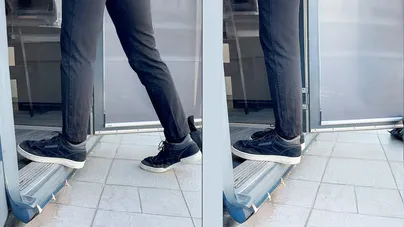
Step ups strengthen each side of the body equally to improve balance, joint stability, and core strength.
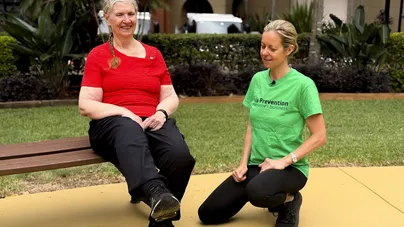
This combination helps reduce joint stiffness, increase circulation, and strengthen your leg muscles.
If you would like to explore more ways to boost your strength and balance, check out these other LiveUp resources. They offer extra ideas and exercises to help you stay active and independent.

Check out 10 chair yoga poses you can try at home. These seated movements are a low‑impact way to improve your strength, mobility, and balance.
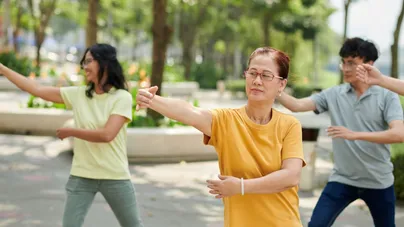
Tai Chi might be low in impact, but it's high in reward. Learn about the benefits of Tai Chi for healthy ageing and follow along with a video demonstration.

Walking football swaps running for walking to make it easier to stay active. Learn more about the game and hear from real players about its benefits.
This class is designed to be safe, gentle, and accessible for people with varying movement levels. There are modifications to help you exercise at a pace and intensity that feels right for your body.
However, everyone’s health needs are different. Speak with your doctor or health professional before trying new exercises, if you:
They can help you work out how to participate safely.
Many of these exercises have variations with or without support or extra resistance. To have access to all options, make sure you have:
The Department of Health recommends doing strength training at least twice a week, and balance or mobility exercises at least 3 times a week. However, it's important to go at a pace that feels right for you.
You don't need to complete the whole class at once. You can start with the short videos to build your confidence and get used to the movements.
As you feel stronger, you can repeat the exercises, try more sections, or move on to the full class.
You can also add other activities and everyday movements to your routine. Doing a mix of exercises can help you stay engaged and support all aspects of your health.