Connection to your community is a vital part of healthy ageing. Here’s why it will be worth it to join that new activity group, even if you’re feeling nervous to get started.
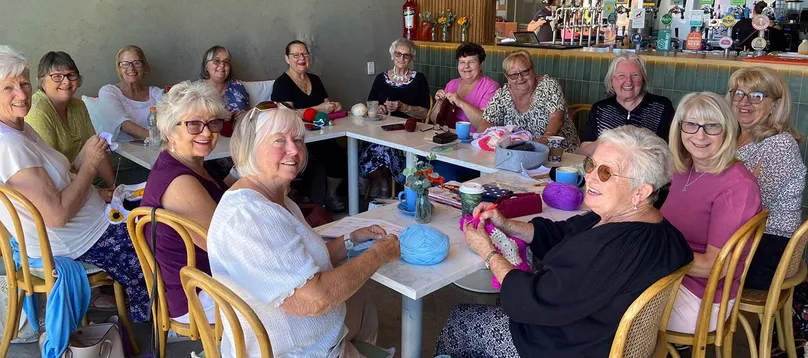
Pictured: Shorehaven Yarners
What types of groups can older people join?
There are many social groups suitable for older adults to join. You can find what works for you.
You could join:
- A group specifically for older people, to spend time with peers you relate to
- A group for people of your cultural background, to support your cultural identity
- An intergenerational playgroup, if you enjoy time with children and their parents
- A group based around your favourite hobby – like reading, gardening, or craft activities
- A walking or gentle exercise group to increase your physical activity
- Multiple, diverse groups – so all your different social needs can be met
It’s normal to feel nervous
Feeling nervous about joining a new group or activity? You’re not the only one.
Trying something new, especially in a social setting, can feel daunting.
Anxiety around unfamiliar social situations is common, even for people who seem confident on the surface. Many people feel unsure before their first session, whether or not they show it.
Why showing up will be worth it
Joining a group can have real benefits, even if it feels challenging to get started.
By taking part, you may:
- Meet new people and expand your social circle
- Feel more connected and less alone
- Boost your mood and sense of belonging through shared experiences
- Keep your mind and body active, which supports overall health
Social connection is linked to better health and longer life in older age.
Close relationships (like family and close friends) are well known to support health. But did you know that feeling part of a group or community is also important? Belonging to groups is linked to better mental health and wellbeing in later life.
It’s especially good if your group activities include movement or time outdoors. This is great for boosting your mental and physical health.