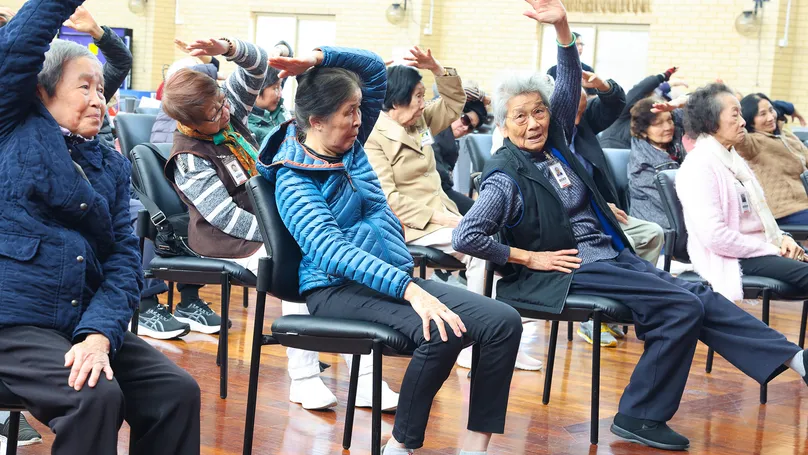
Exercises to build ankle and foot strength
The benefits of exercise
The Department of Health and Aged Care recommend completing at least 30 minutes of moderate-intensity physical activity on most days no matter your age, weight, or health condition.
This is because exercise has so many benefits! Exercise helps you:
- Manage existing health issues
- Reduce the risk of developing chronic health conditions
- Maintain your independence
- Manage pain and improve mobility
Exercising different muscles can have a variety of different health benefits.
For example, doing exercises for your ankles and feet specifically has the added benefit of helping to reduce your risk of falling.
2 strength exercises for your ankles and feet
Repeat each exercise a set number of times, or for a set duration. You could start with 10 repetitions, or 30-second bursts. Increase your sets as you develop more strength and endurance.
Heel raises
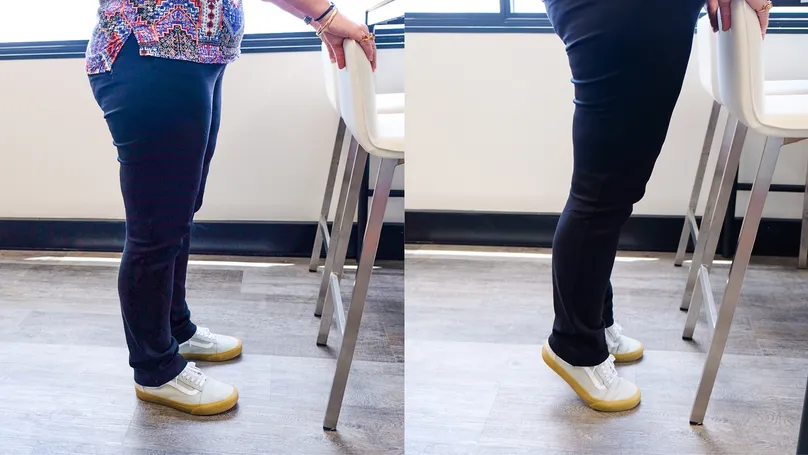
Heel raises help to build strength in your ankles and calf muscles. Strengthening your ankles is important to avoid falling and improve balance.
- Hold on to a chair or table for support and stand tall with good posture.
- Slowly rise up onto the balls of your feet and raise your heels off the ground.
- Hold this position for 2 seconds.
- Slowly lower your heels back to the ground and repeat.
Toe raises
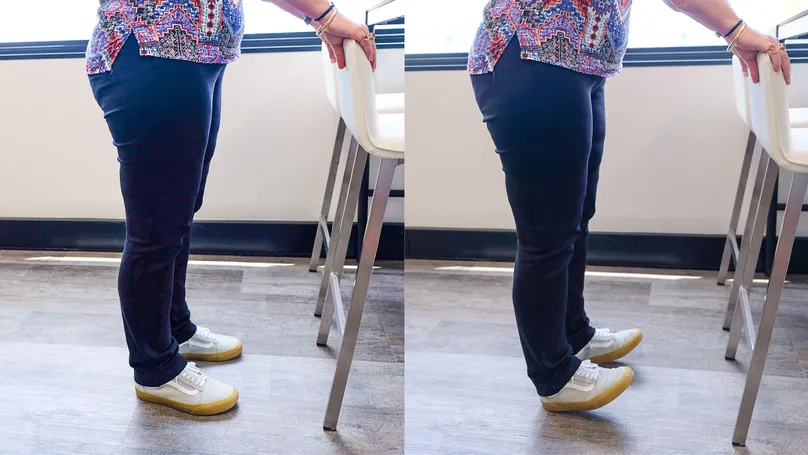
Toe raises help to strengthen the muscles at the front of your feet, which are often weak. These muscles are important as they help you lift your feet over obstacles.
- Hold on to a chair or table for support and stand tall with good posture.
- Slowly bring your toes up off the floor. You may not have quite this level of flexibility but try to raise your toes as far off the floor as you can.
- Hold this position for 2 seconds.
- Slowly lower your toes back to the floor.
How often to do strength exercises
These exercises aim to build strength and mobility in your ankles and feet. Older adults should do strength building exercises at least twice a week. Aim to train all your major muscle groups by doing a variety of different exercises.
You can start by doing a single set of each exercise in this list. When these exercises become too easy, it may be time to increase difficulty or add new challenges to your exercise routine.
Your twice-weekly strength training should be incorporated into the 30 minutes of moderate-intensity physical activity the Health Department recommends you do on most days.
Aim for a mix of strength, aerobic fitness, flexibility, and balance exercises.
The more you exercise, the more benefits you will see – but every little bit helps!
Always ask an allied health professional for help when developing a new exercise regimen.
Get in touch with LiveUp
If you would like to find local exercise classes, social activities, and helpful tips, try the quick LiveUp quiz or call our helpful team for free today on 1800 951 971.
Explore our other resources to learn more about:
- Exercises to improve your balance and reduce your risk of falls
- The importance of exercise for healthy ageing
References
Department of Health. (2021). Physical activity and exercise guidelines for older Australians (65 years and over). https://www.health.gov.au/topics/physical-activity-and-exercise/physical-activity-and-exercise-guidelines-for-all-australians/for-older-australians-65-years-and-over
Mayo Clinic. Strength training: Get stronger, leaner, healthier. https://www.mayoclinic.org/healthy-lifestyle/fitness/in-depth/strength-training/art-20046670