Hip exercises for older people
Why it's important to keep your hips healthy
Fun fact: the hip joint is the largest joint in the human body. We use our hips to complete a variety of daily activities like standing, walking, sitting, using the stairs, and bending to pick something up.
Your hips provide you with strength and stability to support movement and maintain balance. If the muscles around the hip become weak, it can lead to an increased risk of injury. In turn, this can put the surrounding joints like the knee and lower back at greater risk.
Hip pain can affect the tasks and activities you do every day. This includes things like getting dressed in the morning, moving around the house, and even using the bathroom.
What can you do to keep your hips healthy?
Some of the things that keep your hips as healthy as possible include:
- Maintaining a healthy weight
- Regular low-impact exercise
- Balance and falls prevention activities
- Using assistive products
- Wearing good shoes
Hip exercises to try at home
You can perform strengthening exercises for your hips safely and easily in your home. Exercises can be modified if you have poor balance or find standing too difficult. It's best to start with exercises you can perform while seated or lying down. This way you can improve your leg strength before moving on to standing exercises.
Here are some exercises you can try out now, for free.
Level 1 - hip exercises you can do lying down
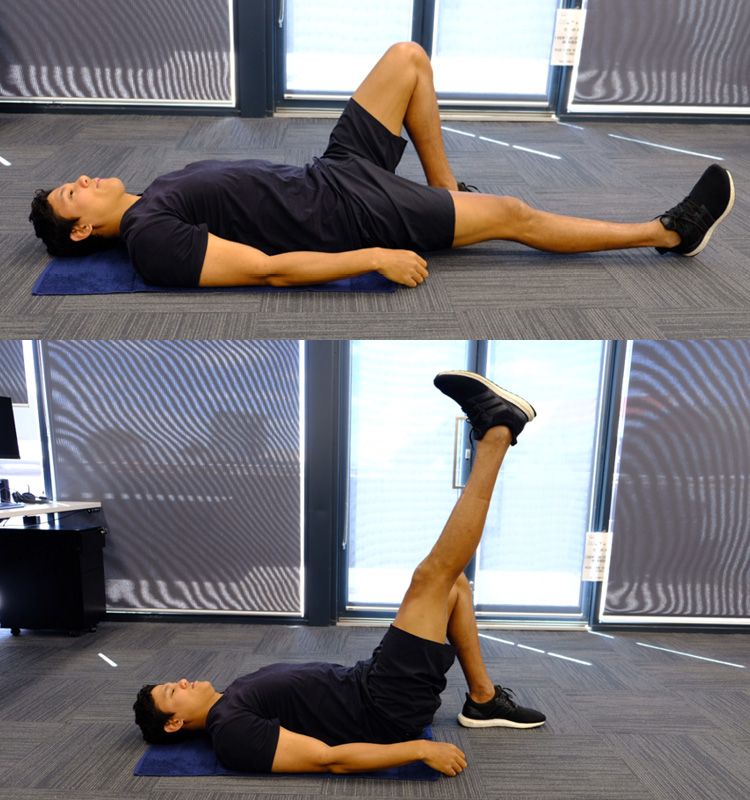
Straight leg raise
This exercise helps strengthen your hip flexors and the muscles on the front of your thigh.
Ensure there is no discomfort in your lower back when completing this exercise.
To perform this exercise:
- Lie flat on your back with one leg straight and the other knee bent with your foot on the mattress or floor.
- Lift your straight leg as high as you feel is comfortable. Keep your stomach tight and gently brace throughout the movement.
- Slowly lower and return to the starting position.
- Repeat with the other leg.
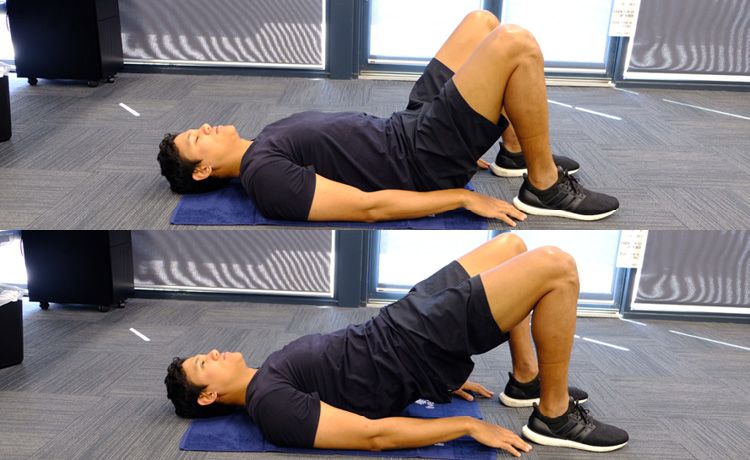
Bridge
This exercise is used to improve leg stability by strengthening the hips and backside muscles. We use these muscles every day to move forward when walking, stepping up when climbing stairs, and standing up from a seated position.
To perform this exercise:
- Lie on your back with your knees bent and feet flat.
- Lift your hips off the ground ensuring your hips are balanced.
- Squeeze the muscles of your backside as you lift your hips up.
- Try not to arch your back.
- Hold for a few seconds at the top, then slowly lower your hips back down.
- Do this in a controlled manner.
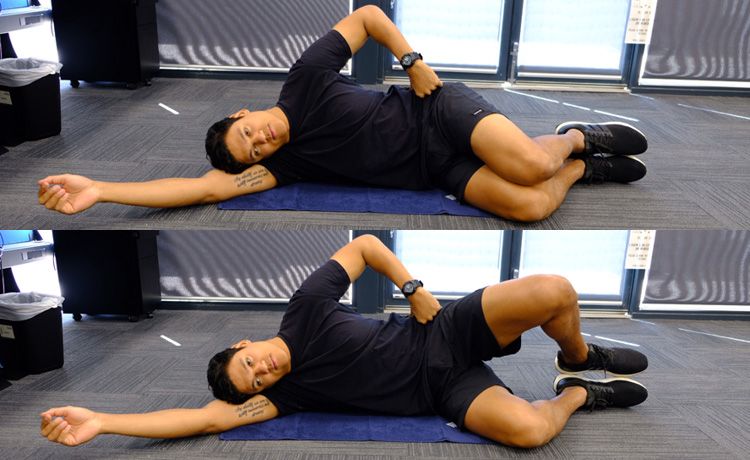
Clam shell
This exercise helps to strengthen the muscles that surround your hips. These muscles help stabilise your hips and keep you balanced.
To perform this exercise:
- Lie on your side, with legs stacked on top of each other and knees bent.
- Rest your head on your lower arm or a pillow, and use your top arm to steady your frame.
- Be sure that your hipbones are stacked on top of one another and try to avoid rocking backward.
- Keep your stomach tight to stabilise your spine and pelvis.
- With your feet touching, raise your upper knee as high as you can without rocking your hips.
- Slowly lower your knee and repeat.
Level 2 - hip exercises you can do while seated
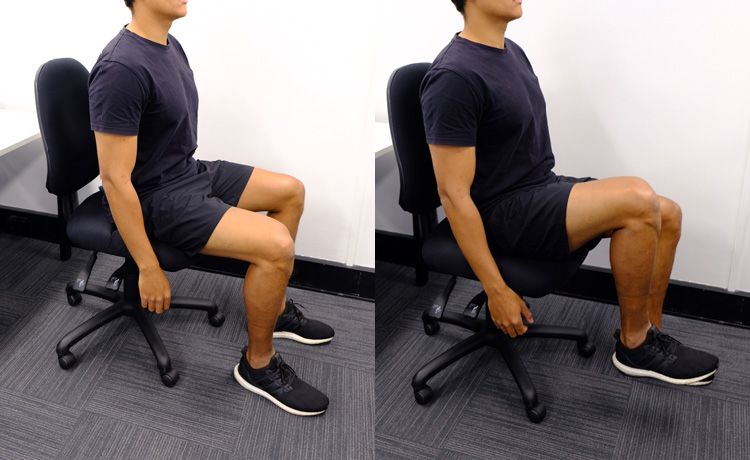
Hip marching
This exercise strengthens your hip flexor muscles. It can help maintain or improve your lower body strength and ensures you are able to lift your foot off the ground.
To perform this exercise:
- Sit up tall with your feet flat on the floor.
- Your hands can rest at the sides of your chair, or wherever is most comfortable.
- Lift up your right knee as high as comfortable, then lower it.
- Alternate lifting your knees.
- Ensure you perform this movement in a slow and controlled manner.
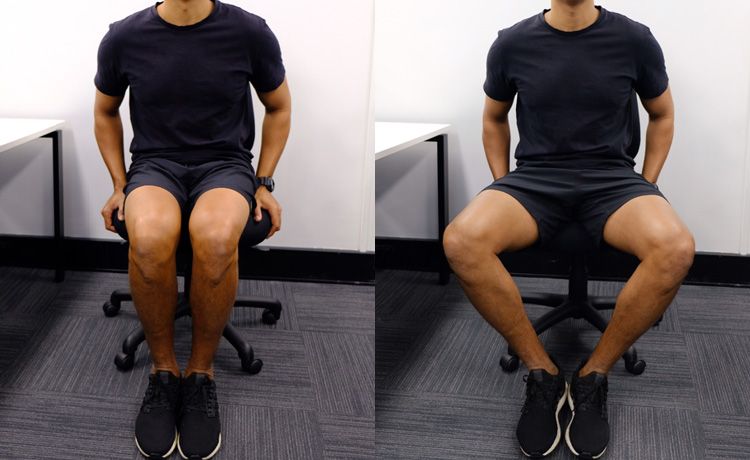
Hip opener
This exercise can help improve your hip mobility and abductor strength. These muscles are used when standing, walking, and performing tasks like getting in and out of cars.
To perform this exercise:
- Sit up tall in your chair with your knees together.
- Slowly push your knees out to the side and then bring them back together in a controlled motion.
- Do not rush the exercise. Maintain an upright posture throughout.
- If this is too easy, perform this exercise with a resistance band wrapped around your knees.
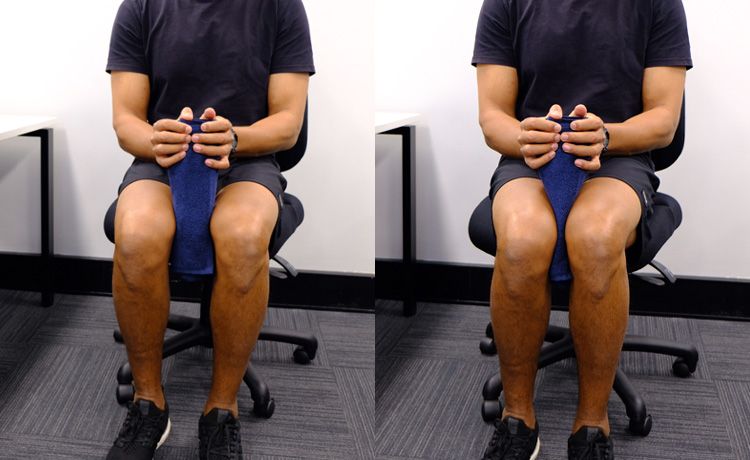
Hip squeeze
This exercise can help improve your hip mobility and adductor strength. These muscles are important for hip stability during different movements like walking and sitting.
To perform this exercise:
- Sitting up tall, shuffle forward closer to the edge of your chair.
- Place a cushion or a rolled-up towel between your knees.
- Bring your feet together, ensuring they are flat on the floor.
- Whilst lightly holding the cushion with your hands, squeeze the cushion using your knees.
- Hold this for 5 seconds and relax.
Level 3 - hip exercises you can do standing up
Important safety notice
Make sure to perform standing exercises next to something stable. For example, a railing, table, or chair. This will provide you support so that you do not lose your balance.
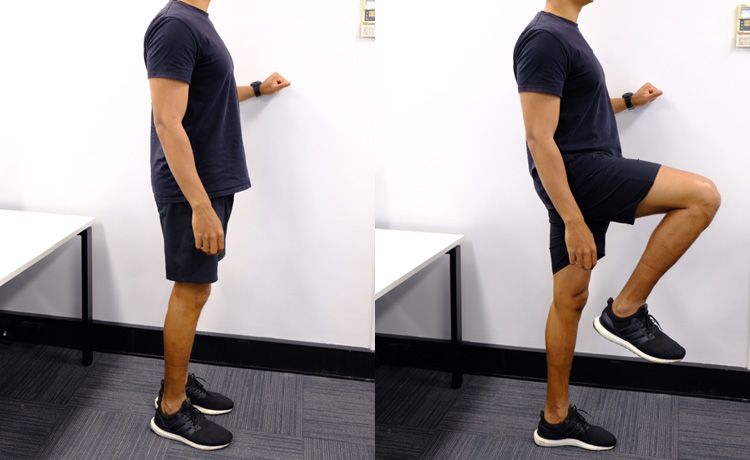
Hip marching
Similar to performing in a seated position, this is a great exercise to maintain or improve your leg strength and mobility. It also adds a component of balance and stability.
To perform this exercise:
- Begin by standing upright beside a wall or gently holding on to a sturdy chair.
- Raise your left leg, lifting your knee toward your chest.
- Alternate legs and complete this exercise in a controlled manner.
- Try not to hold your breath.
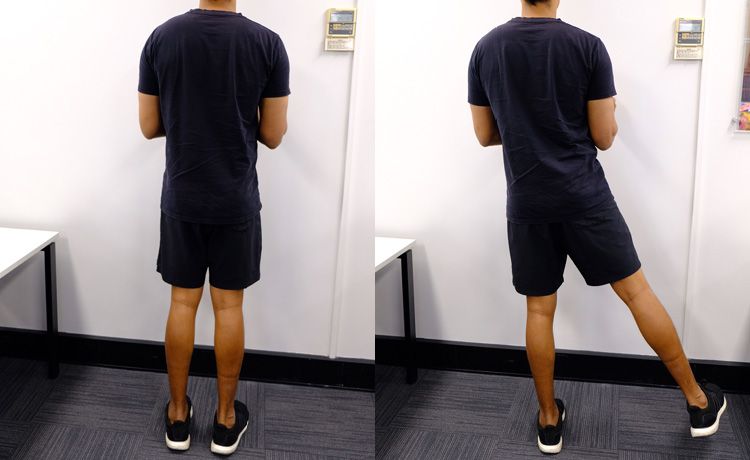
Side kicks
This exercise is used to maintain or improve your leg strength and specifically targets the muscles on the side of your hips.
To perform this exercise:
- Stand upright and hold onto a chair or wall for stability.
- Start by bringing both feet together.
- Slowly raise one leg off the ground and away from your body, kicking out to the side.
- Return to the start position. Switch legs and repeat on the opposite side. Avoid leaning to one side.
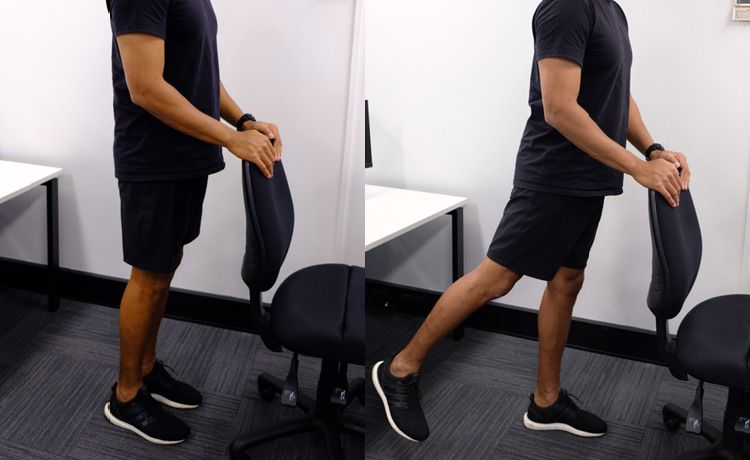
Back kicks
This exercise is used to maintain or improve your leg strength and specifically targets the muscles of your backside.
To perform this exercise:
- Stand upright and hold onto a chair or wall for stability.
- Keep your legs straight throughout the movement.
- Extend your right leg back, keeping your toes on the ground.
- Your legs will create a triangle-like position.
- Keep your stomach tight and try to avoid arching your back.
- Return your foot to the starting position.
- Repeat for the other leg.
How often to do hip exercises
These exercises aim to build strength and mobility in your hip. Older adults should do strength building exercises at least twice a week. Aim to train all your major muscle groups by doing a variety of different exercises.
You can start by doing a single set of each exercise in this list. When these exercises become too easy, it may be time to increase difficulty or add new challenges to your exercise routine.
Your twice-weekly strength training should be incorporated into the 30 minutes of moderate-intensity physical activity the Health Department recommends you do on most days.
Aim for a mix of strength, aerobic fitness, flexibility, and balance exercises.
The more you exercise, the more benefits you will see – but every little bit helps!
Always ask an allied health professional for help when developing a new exercise regimen.
More information about hip pain
Common conditions that cause hip pain as you age
- Arthritis affects the hips of many people as they age. This can result in pain, stiffness, and restricted movement in the hip joint.
- Fractures and dislocation of the hip is common because bones become less dense as you age, and your risk of falling increases.
- Muscle injury and referred pain in the hip can be a result of injury or inflammation to the muscles and tendons that surround the hip. Pinched or irritated nerves and lower back problems can also impact the hips.
How is hip pain treated?
A doctor or physiotherapist can work out what is causing pain in your hips.
They might talk to you and examine:
- How you stand
- How you walk
- What movements cause you pain
Treatment for hip pain might include:
- Physiotherapy, exercise physiology, or occupational therapy
- Exercise, stretching, strength training, or hydrotherapy
- Anti-inflammatory creams or pain relief medicines
- Antibiotics and steroid injections
- Advice about weight loss
Prevention is always better than cure. The best way to do this is by staying active and continuing to do the activities you do every day for as long as you can.
Helpful tools for keeping your hips healthy
There are tools that can help you perform everyday tasks. They can be used to improve safety with certain activities. Some readily available assistive products include:
- A long-handled sponge for tough-to-reach spots
- Sock aid to get socks on
- Shoehorn to fit shoes on
- Dressing stick to reach over your shoulder or down your leg
- A long-handled reacher for those tough-to-reach items on shelves or the floor
- Non-slip safety mats
Some assistive products require an assessment to ensure they are suitable for you. Occupational therapists are the experts in prescribing assistive products. They will help you find the best products for your situation. This may include:
- A raised toilet seat so it’s easier to sit down
- Grab rails so you have some extra support
- Ramps to avoid having to lift your foot too high
- Walking sticks and frames to help you get around
Get in touch with LiveUp
If you would like to find local exercise classes, social activities, and helpful tips, try the quick LiveUp quiz or call our helpful team for free today on 1800 951 971.
You can also get more tips and advice by following the links below:
- Tips for strong and healthy hips
- Know your bones tool | Healthy Bones Australia
- A risk score for hip and knee replacements | ABC Radio National Health Report
References
Department of Health. (2021). Physical activity and exercise guidelines for older Australians (65 years and over). https://www.health.gov.au/topics/physical-activity-and-exercise/physical-activity-and-exercise-guidelines-for-all-australians/for-older-australians-65-years-and-over
Mayo Clinic. Strength training: Get stronger, leaner, healthier. https://www.mayoclinic.org/healthy-lifestyle/fitness/in-depth/strength-training/art-20046670