Independent dressing is a skill that could be taken for granted. It’s also a skill you rely on every day.
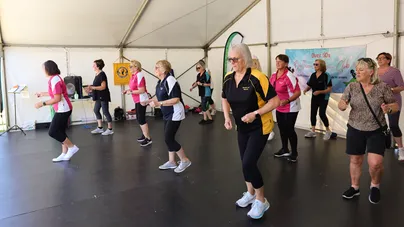
Did you know getting dressed counts as light incidental exercise? This means it's a form of exercise you can do without really thinking about it.
This type of regular movement can help keep you mobile and fit. It can also help with management of pain and arthritis.
Below are some examples of dressing aids and tips help you keep dressing yourself independently.
Being able to get dressed on your own is a common goal for most older people. Here are some of the obstacles many you may face as you age, which may make getting dressed more difficult:
Do any of these struggles sound familiar? If so, read on for a few potential solutions.
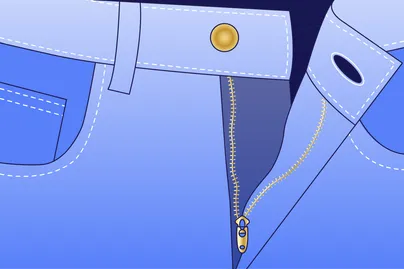
There are so many ways to make dressing easier! Some people change the type of clothes they wear. This could mean wearing pull-on trousers instead of zipped ones, or wearing clothes that don’t have buttons.
There are also many types of adaptive clothes available nowadays. Even fashion designers are getting involved with the trend!
There are clever ‘hacks’ to make dressing easier. There’s a huge range of easy-to-use dressing aids available at well-known retailers.
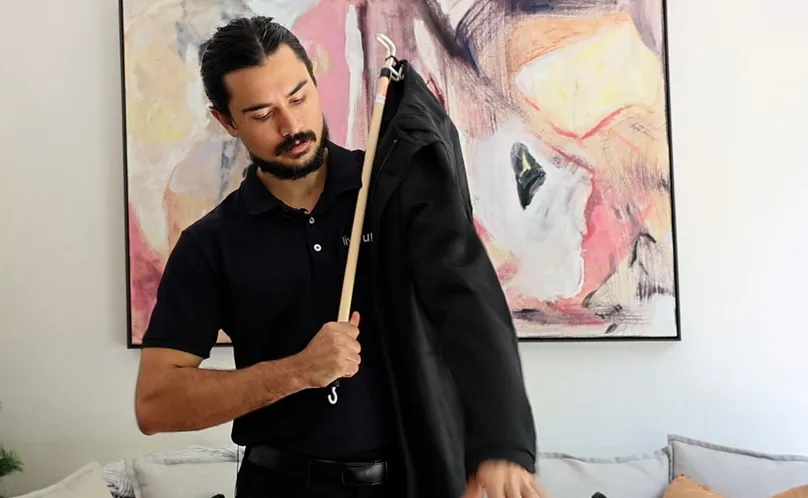
A dressing stick is a useful dressing aid if you have difficulty bending and reaching.

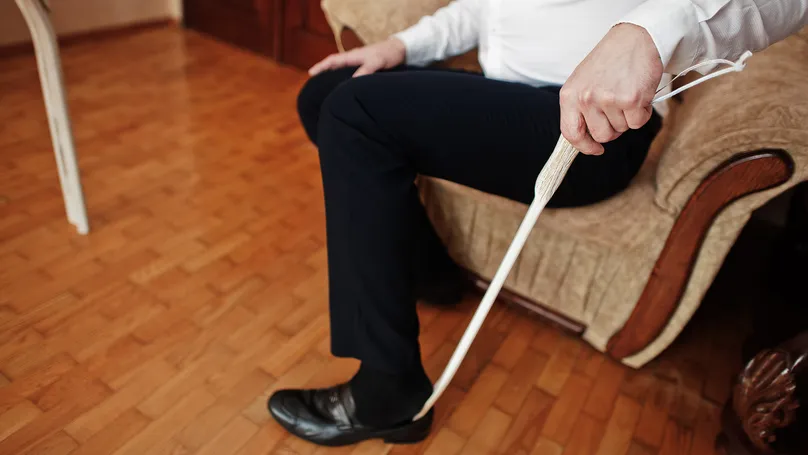
A long-handled shoehorn is a helpful product if you have difficulty bending forward or reaching your feet to put on your shoes.

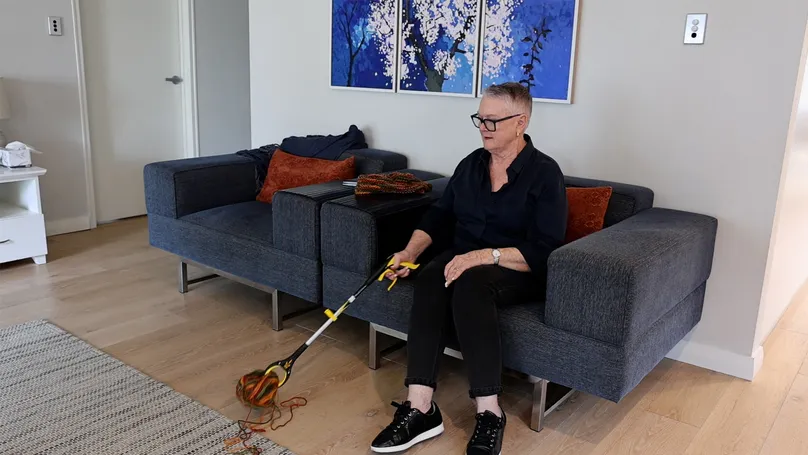
A long-handled reacher is useful if you can’t bend down or reach far enough to pick something up.

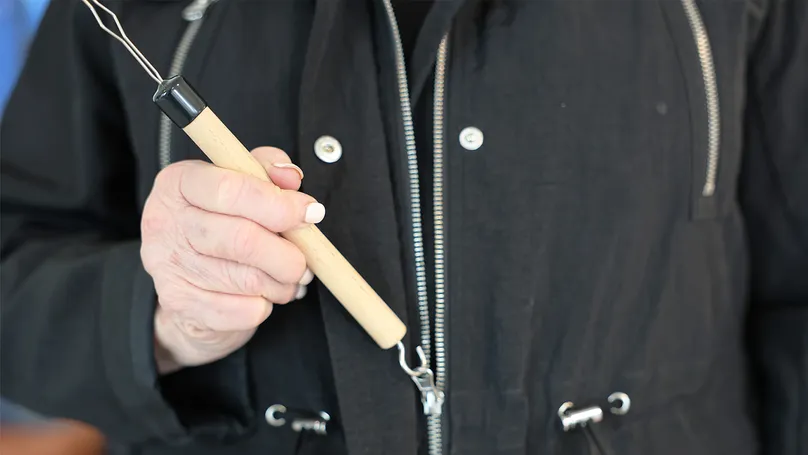
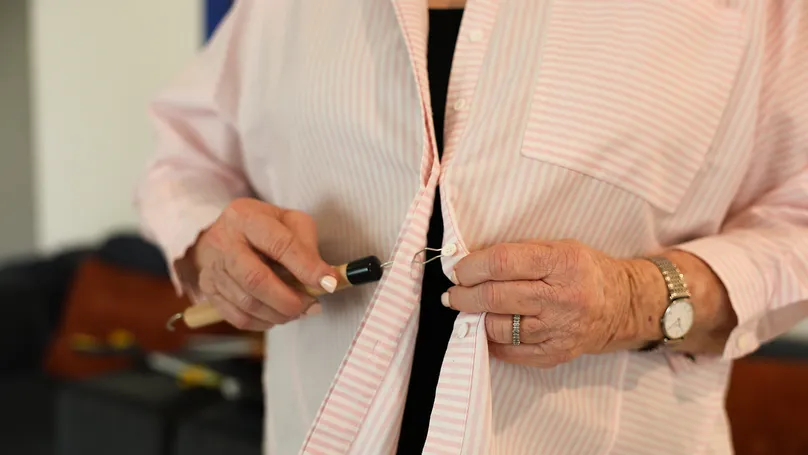
A button hook and zip puller multitool is useful if you have difficulty managing fiddly clothing items with your hand. Fastening and unfastening buttons is a common dressing difficulty because buttons are small, and you need to use two hands for buttoning.

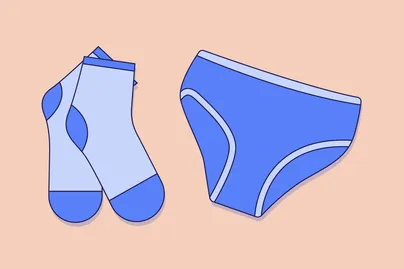
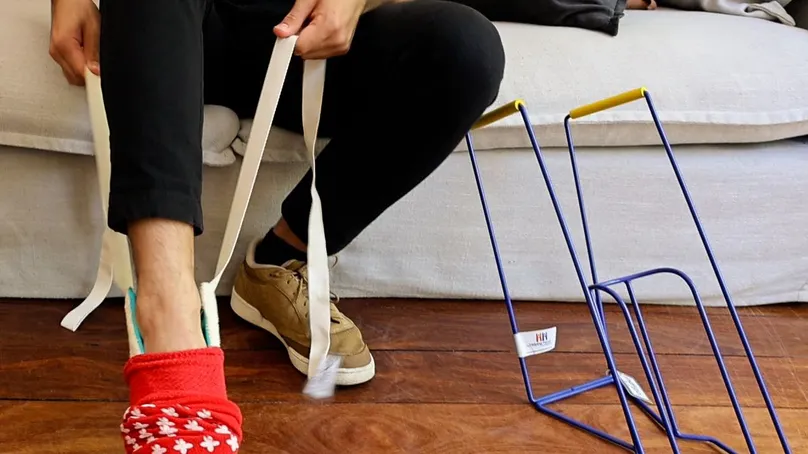
As you get older, bending and gripping things may become harder to do. Being able to put on socks or stockings yourself is a common goal for older people.

If your doctor has advised you to wear pressure stockings then it’s important to follow those instructions.
Pressure stockings are very tight, which can make them difficult to take on and off. An ordinary sock or stocking aid is not strong enough to hold a pressure stocking open. There are a few products that are strong enough to help with putting on and taking off pressure stockings.
You may benefit from seeing an occupational therapist (OT) for some professional advice. An OT can:
Find an OT near you through Occupational Therapy Australia.
Can’t find an OT in your area through OTA? You can also check Healthdirect’s tool for finding an OT by location.
If you need more information about healthy ageing, take the LiveUp quiz or get in touch with one of our helpful team on 1800 951 971.
If you would like some more information or helpful tips, take the LiveUp quiz or get in touch with one of our team on 1800 951 971.
Arthritis Australia. (2023). Physical activity and exercise. https://arthritisaustralia.com.au/managing-arthritis/living-with-arthritis/physical-activity-and-exercise
Australian Department of Health and Aged Care. (2021). About physical activity and exercise. https://www.health.gov.au/topics/physical-activity-and-exercise/about-physical-activity-and-exercise
LiveUp provides free information to help you make informed decisions about your health. This information is for general and educational purposes only, is not intended to provide a comprehensive guide, and does not replace medical advice. Everyone is different, so some of these tips may work better for you than others. You should use your own judgment and seek medical advice when applying this information to yourself, to determine if it is suitable in your circumstances. Your use of, or reliance on, this information is solely at your own risk. Independent Living Assessment Incorporated is not responsible or liable for any injury, loss, or damage caused as a result of your use of, or reliance on, this information.
You can print out the PDF and stick it to your fridge or file away the tips to revisit at a later time.

Did you enjoy this article? You may also like reading similar healthy ageing articles.
See all Comfort articlesYour feedback helps LiveUp to curate information that matters to you.