Foods that support strength and balance as you age
4 minute readShare this article
Staying strong and steady isn’t just about exercise – good nutrition matters too.
This article was reviewed by Accredited Practising Dietitian Dr Anthony Villani, President of the Australia and New Zealand Society for Sarcopenia and Frailty Research (ANZSSFR). Dr Villani is a member of Dietitians Australia, the peak professional body for nutrition and dietetics in Australia.
The foods we eat help support our muscles, bones, and energy levels. This makes everyday activities easier.
Small changes can make a big difference over time. Choosing nourishing foods and staying hydrated can help keep your body strong, balanced, and ready for daily life.
Why nutrition is more important as you age
As you get older, it’s common to have a smaller appetite, lose muscle and strength, and feel less energetic.
Eating well can help you:
Maintain muscle and strength
Stay balanced and mobile
Reduce your risk of falls
Improve energy and recovery
Good nutrition helps you stay active, independent, and confident so you can keep doing the things you enjoy.
Key food and nutrients that support strength and balance
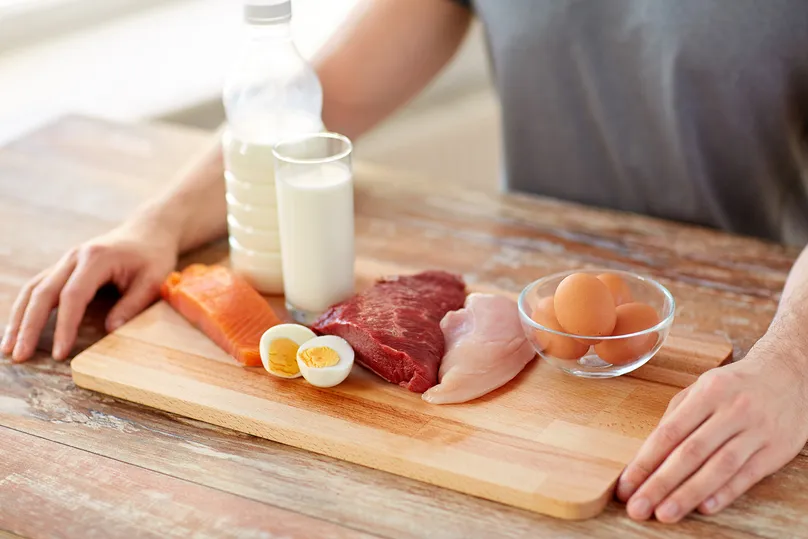
Protein
Protein builds and maintains muscles that support movement and balance.
Good sources include:
Eggs
Yoghurt
Fish
Baked beans, chickpeas, lentils, and black beans
Lean red meat and chicken
Tofu and soy beverages
Calcium
Calcium helps maintain your bone density and keep bones strong.
It can be found in:
Dairy foods
Calcium-fortified milk alternatives
Canned sardines and salmon with edible bones
Almond
Firm tofu
Leafy green vegetables
Vitamin D
Helps your body absorb calcium and supports muscle function. You can get vitamin D from safe sunlight exposure, as well as:
Did you find this article useful?
Your feedback helps LiveUp to curate information that matters to you.
You might also be interested in these resources
Easy meal prep ideas for older adults
Discover meal prep tips for older adults. Save time with simple recipes and planning ideas that support healthy, independent living.
Drinking enough water is important for preventing dehydration.
Dehydration can impair your concentration and balance. It can increase the risk of dizziness and falls.
Try to drink water regularly throughout the day, even if you don’t feel thirsty.
Whole foods
Whole foods are foods that are unprocessed or minimally processed. They provide the energy and nutrients your body needs to stay active throughout the day.
Aim for a variety of:
Fruit
Vegetables
Whole grains, such as oats and wholemeal bread
You can also get healthy fats from foods like:
Avocado
Nuts
Seeds
Small habits that can make a big difference
Small simple habits can help support strength, balance, energy, and independence over time.
Add protein to every meal
Try to include a source of protein at every meal and snack, such as eggs, yoghurt, beans, fish, or lean meat, to help maintain muscle strength.
Prioritising protein at every meal and snack is important because as we age, our bodies’ ability to use protein to help support muscle health is compromised.
— Dr Anthony Villani
Snack smart
Keep easy, healthy snacks on hand, such as fruit, nuts, yoghurt, or wholegrain crackers, so you always have something nutritious to eat.
Don’t skip meals
Don’t skip meals, as regular eating helps provide the energy your body needs throughout the day.
Share meals with others
Sharing meals with family, friends, or community groups can make eating more enjoyable and help you stay connected.
The gradual loss of appetite and weight as we age is partly driven by social isolation. Eating meals together encourages food intake and is associated with a higher quality of life and improved wellbeing.
— Dr Anthony Villani
Stay active
For the best results, combine healthy eating with regular movement and strength exercises. Aim for strength training at least two times per week to help combat age-related muscle mass loss.
Speak with an Accredited Practicing Dietitian (APD) if you have concerns about appetite or nutrition. You can find one using Dietitians Australia’s search tool:
Franzke, B., Neubauer, O., Cameron-Smith, D., & Wagner, K. H. (2018). Dietary Protein, Muscle and Physical Function in the Very Old. Nutrients, 10(7), 935. https://doi.org/10.3390/nu10070935
Coelho-Junior, H. J., Calvani, R., Azzolino, D., Picca, A., Tosato, M., Landi, F., Cesari, M., & Marzetti, E. (2022). Protein Intake and Sarcopenia in Older Adults: A Systematic Review and Meta-Analysis. International journal of environmental research and public health, 19(14), 8718. https://doi.org/10.3390/ijerph19148718
Booth, S. L., Campbell, W. W., Volpi, E., Ferrucci, L., Starke-Reed, P., Bailey, R. L., Bales, C. W., Barbey, A. K., Choi, I.-Y., Houston, D. K., Jacques, P. F., Mattes, R. D., Rasmussen, B. B., & Tucker, K. L. (2026). Nutrition for older adults: Perspectives on dietary guidance for healthy aging. Current Developments in Nutrition, 10(3), 107658. https://doi.org/10.1016/j.cdnut.2026.107658
How to use this information
LiveUp provides free information to help you make informed decisions about your health. This information is for general and educational purposes only, is not intended to provide a comprehensive guide, and does not replace medical advice. Everyone is different, so some of these tips may work better for you than others. You should use your own judgment and seek medical advice when applying this information to yourself, to determine if it is suitable in your circumstances. Your use of, or reliance on, this information is solely at your own risk. Independent Living Assessment Incorporated is not responsible or liable for any injury, loss, or damage caused as a result of your use of, or reliance on, this information.
Download and print this article:
You can print out the PDF and stick it to your fridge or file away the tips to revisit at a later time.
Read more Nutrition articles
Did you enjoy this article? You may also like reading similar healthy ageing articles.