This article is for older people who want to better understand frailty. Learning about frailty early can help you notice changes sooner. This allows you to take action to stay strong, independent, and well for longer.
This article was written in collaboration with the Australian Frailty Network (AFN).

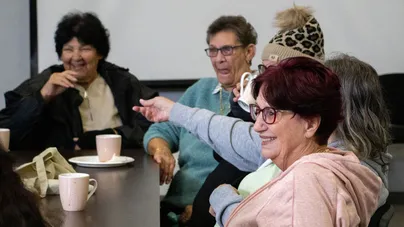
Photograph by Di East for Picture Yourself (CC BY-NC).
What is frailty, and why is early awareness important?
Frailty is a state of increased vulnerability. It can affect strength, energy, and resilience over time. Frailty happens when the body loses some of its physical and physiological reserves across several body systems. This makes it harder to cope with everyday stressors. Someone who is frail may take longer to recover from events such as a urinary tract infection or a fractured hip.
Frailty can develop for many reasons, including:
- Increasing age
- Chronic health conditions
- Social isolation
Around 20–24% of older adults in Australia are frail, with a further 50% considered pre-frail. While the risk increases with age, frailty is not an inevitable part of ageing. With the right support, it can often be prevented, delayed, or even reversed.
Why this matters for you – and how it connects to everyday life
Older adults living with frailty are more likely to experience serious health impacts, even from minor issues. This can include a sudden decline in health after common illnesses like the flu, or events such as a fall. People with frailty are also more likely to need hospitalisation, require long‑term care, or experience earlier death.
Frailty does not always appear suddenly. It often shows up in small, everyday ways, such as:
- Feeling weaker or more tired than usual
- Moving more slowly or noticing changes in balance
- Taking longer than expected to recover from illness
Recognising these early signs creates an opportunity to take action. Acting early can help you maintain your strength, independence, and quality of life for longer.
Self-check questions – are you at risk of frailty?
This self‑check is based on the Morely FRAIL Scale:
- In the last 4 weeks, did you feel tired all or most of the time?
- In the last 4 weeks by yourself and not using aids, did you have any difficulty walking up 10 steps without resting?
- In the last 4 weeks by yourself and not using aids, did you have difficulty walking