10 easy strength exercises to do at home for healthy ageing
Why strength training is important
Maintaining strength is important as you age because muscle mass and bone density naturally decline. You can build strength safely by using resistance through pushing or pulling movements.
Here’s how doing some simple strength exercises can improve your quality of life:
- Strength training helps maintain muscle mass. This improves balance and coordination. So, it lowers your risk of falls. And if you do fall, strong muscles can help lessen the impact.
- Strength training stimulates bone growth. This helps maintain bone density and decreases your chance of injury in a fall.
- Strength training improves your mobility, helping you do everyday activities. This includes things like getting dressed, going shopping, or playing with grandchildren.
The best part is you can do this at home for free. No fancy gym equipment necessary!
There are safe low-impact exercises you can do with just your bodyweight. Gravity will provide the resistance for you to work against. This includes activities such as walking or chair exercises. You can also do some exercises using everyday items for extra resistance.
Here are some easy ways to get started with strength training, using only what you'd find in your home.
10 strength exercises you can do with household objects
Repeat each exercise a set number of times, or for a set duration. You could start with 10 repetitions, or 30-second bursts. Increase your sets as you develop more strength and endurance.
Safety notice
Consider keeping a friend nearby when trying new exercises.
Be sure to brace your abdominal muscles for these exercises. This is also known as engaging your core. To do this, maintain a neutral (straight) spine and draw in your abdominal muscles. For deeper engagement, also activate your pelvic floor muscles.
1. Chair squats
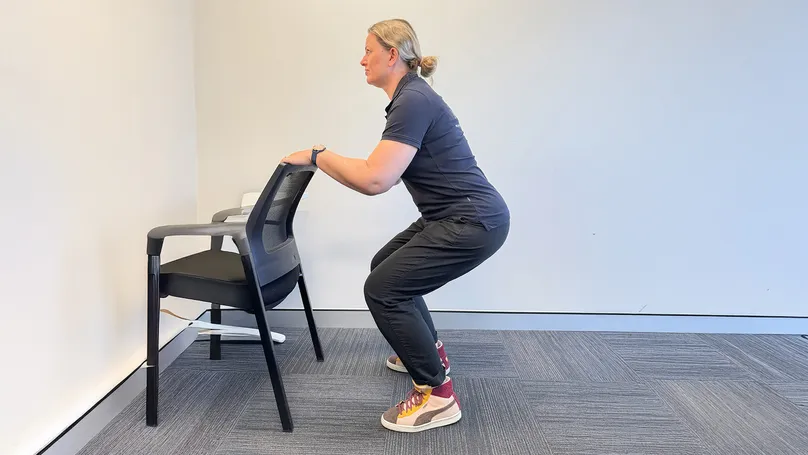
- Grab a sturdy chair and place it in front of you. Hold onto the chair back for stability.
- Stand with your feet shoulder-width apart.
- Slowly lower your body as if you're about to sit back into a chair.
- If you have arthritis in your knees, keep your knees behind or directly above your toes.
- Go down as low as you feel comfortable, aiming for your thighs to be parallel with the ground. Keep your heels on the ground throughout the exercise.
- Slowly lift back up to standing.
Increasing difficulty
You can also do chair quats with the chair behind you as a safety measure rather than as support. This is a variation of the sit-to-stand exercise. Begin standing, avoid using armrests, and lightly touch your bottom to the seat instead of sitting down fully.
2. Wall push-ups
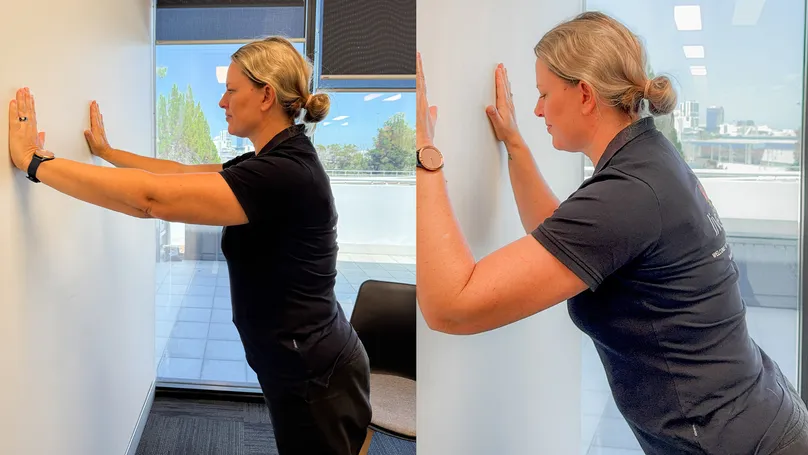
- Stand facing a wall, about an arm's distance away.
- Put the palms of your hands on the wall at shoulder height. Placing your hands lower on the wall will decrease the difficulty.
- Lean forwards, bringing your chest close to the wall by bending your elbows. Keep your back straight and your feet planted where they are.
- Straighten your arms again to push yourself back upright.
Increasing difficulty
You can also do push-ups using a kitchen bench instead of a wall. This lowers the incline of your push-up, which makes it more difficult. You can do this by placing your hands on the edge of the bench. Keeping your back and legs in a straight line, lower your chest towards the bench before pushing back up.
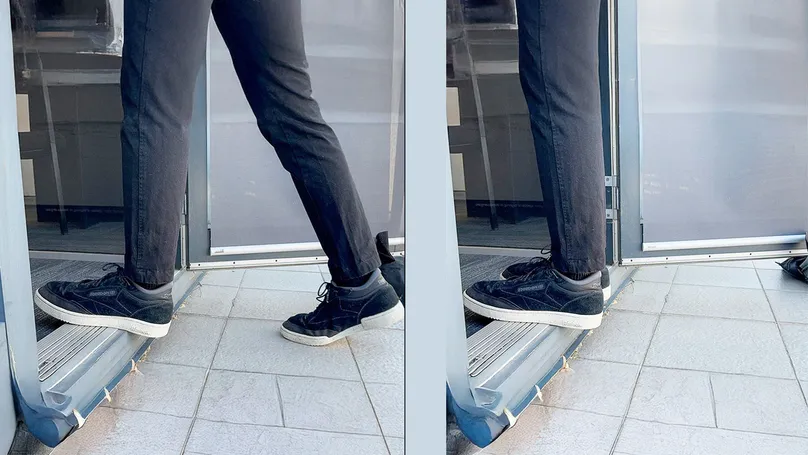
3. Stair step-ups
Use the stairs for this exercise, making sure you can reach the railing or a wall for support. If you don't have any stairs, maybe use a curb outside, garage step, or a sturdy footstool that's a safe height for stepping onto.
- Stand in front of your step.
- Step your right foot up onto the step, then bring your left foot up next to it.
- Step your right foot back down behind you, followed by your left again.
- Repeat, but this time leading with your left foot. Alternate which foot leads with each repetition.
How to make your own weights
For the following exercises, get two water bottles and fill them up with water. Or use food cans or bags of rice. Find something that won't be too heavy for you to lift with one hand. Increase the weight by choosing bigger bottles or bags of rice as your strength develops.
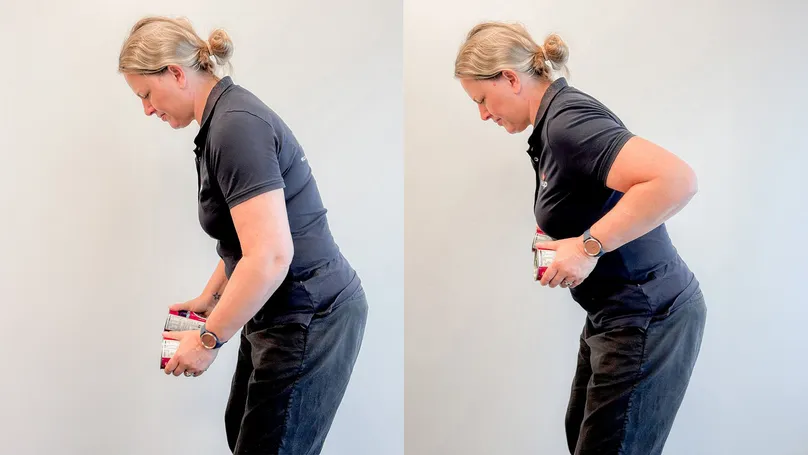
4. Bent-over row
Do this exercise near a wall or something to hold onto for stability.
- Stand with your feet hip-width apart, knees slightly bent for stability.
- Hold a weight in each hand, palms facing your body.
- Bend at your hips to lean forward slightly, keeping your back straight. Your torso should be at about a 45-degree angle to the floor. Let your arms hang straight down towards the floor, elbows slightly bent.
- Pull the weights towards your torso in a rowing motion, squeezing your shoulder blades together. Keep your elbows close to your body.
- Carefully lower the weights back to the starting position.
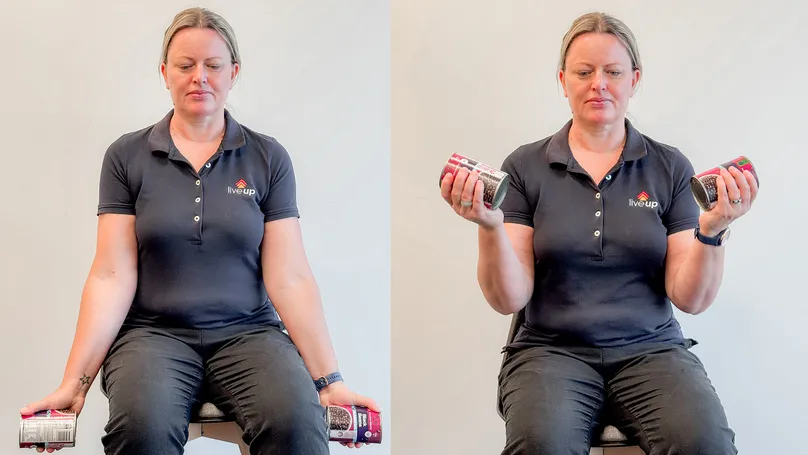
5. Biceps curls
- It's easiest to be sitting for this exercise. Keep your back straight and your feet flat on the floor.
- Hold one makeshift weight in each hand. Let your arms be low by your sides, with your palms facing forwards as they grip the weights. Or, to make this a little easier, rest your hands on your knees with your palms facing upwards as they grip the weights.
- Keep your elbows tucked in close to your body as you curl the weights up towards your shoulders.
- Once you have fully flexed your elbows, slowly bring the weights back down to your sides.
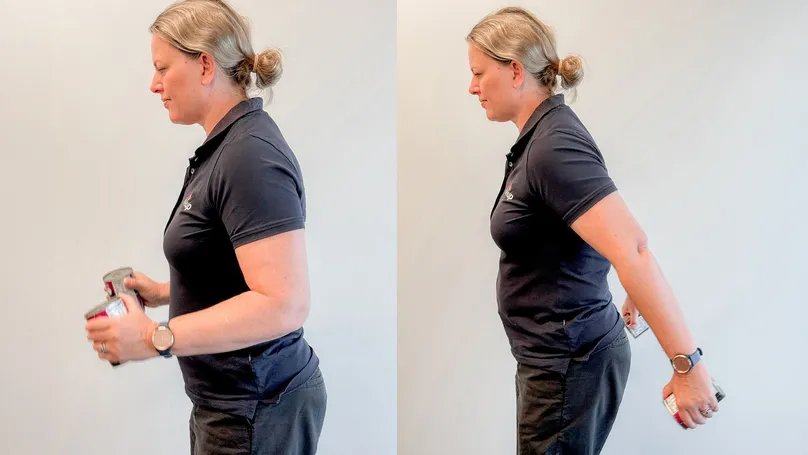
6. Triceps kickbacks
- Sit or stand straight with your feet flat on the floor hip-width apart. If sitting, choose a chair without a back.
- Hold a weight in each hand. (Begin with lighter weights.)
- Have your arms out behind you, with elbows bent at 90-degree angles and palms facing your body. Keep your elbows tucked in, so your upper arms are parallel with each other.
- Slowly extend your elbows to straighten your arms behind you. Keep your elbows and upper arms in the same place. Once fully extended, hold for a moment.
- Focusing on triceps, carefully flex (bend) your elbows to lower the weights again.
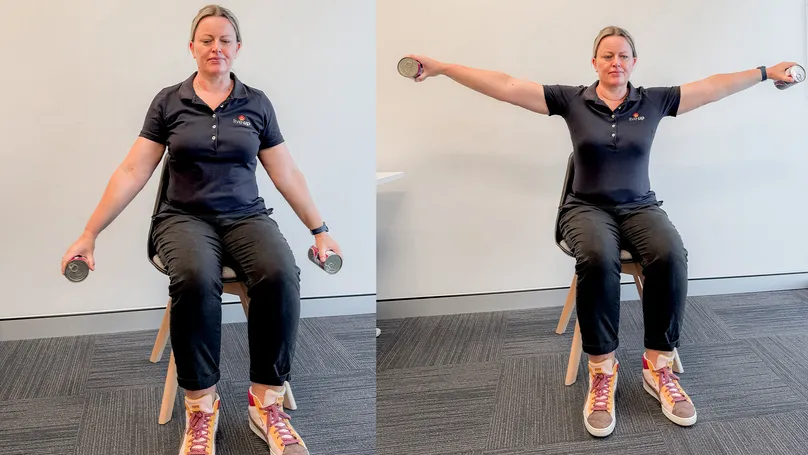
7. Lateral raises
- This is easier when seated. Sit straight with both feet flat on the floor.
- Hold a weight in each hand, arms down at your sides, palms facing inward.
- Lift the weights by lifting your arms straight out on either side until parallel with the floor. You should be making a T shape with your upper body, with palms facing down.
- Slowly lower the weights back down to your sides.
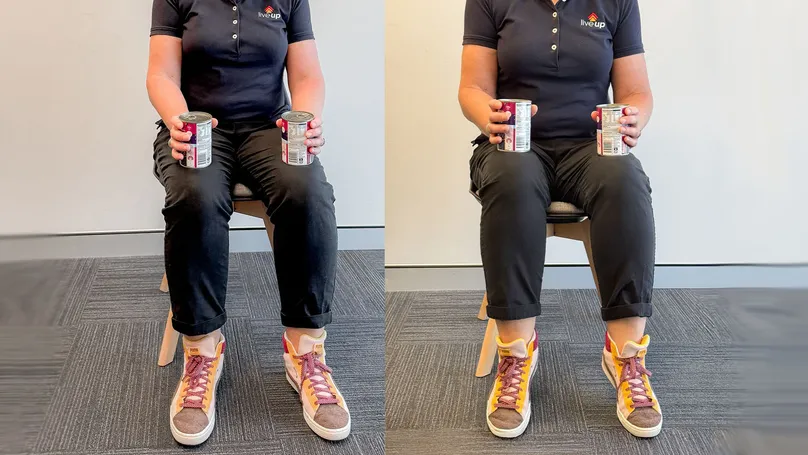
8. Seated heel raises with weights
This exercise builds calf strength and ankle stability. This makes it helpful for falls prevention. Learn more about ankle and foot strength exercises.
- Sit straight in your chair with both feet flat on the floor, hip-width apart.
- Hold a weight in each hand, resting on your thighs.
- Lift both heels off the floor by pushing with your toes on the ground. Keep your weights rested on your thighs. Only lift your heels as high as is comfortable.
- Slowly lower your heels back to the floor.
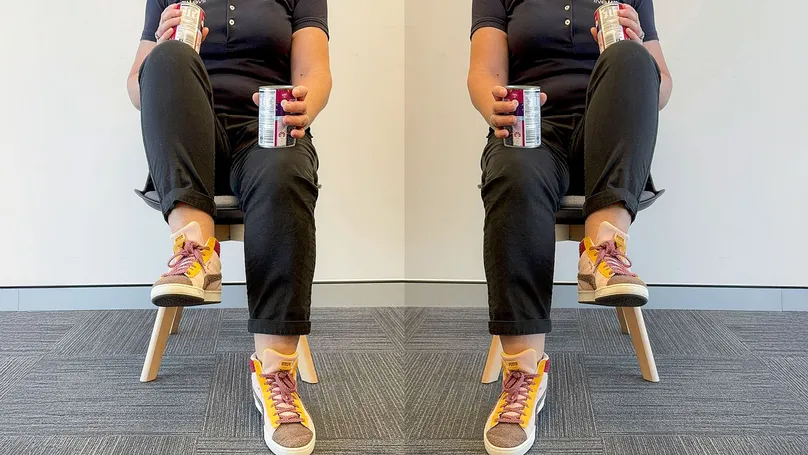
9. Seated marching with weights
This exercise will strengthen your hip flexors and improve coordination. Learn more about exercises for hip health.
- Sit in your chair with your back straight, core engaged, and both feet on the floor.
- Hold a weight in each hand, resting them comfortably on your thighs.
- Lift one leg off the floor by bringing your knee towards your chest. Keep your back straight. Then lower the leg back to the floor.
- Lift the other leg in the same way, then lower it to the floor again.
Adjusting the grip of your makeshift weights
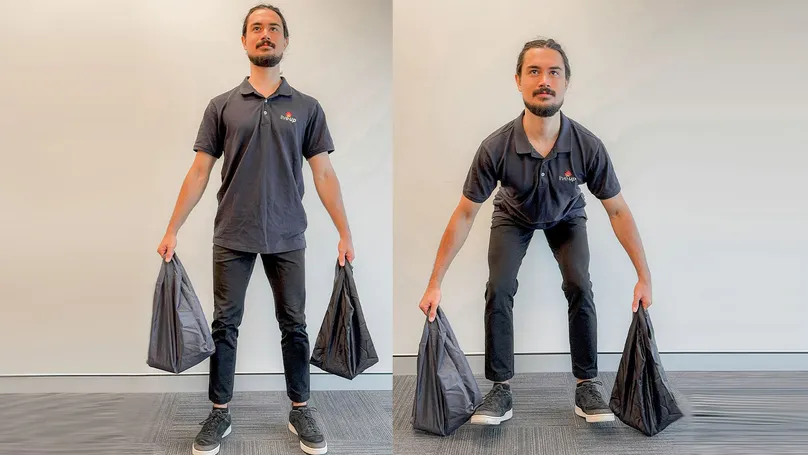
Get two shopping bags and put one of your makeshift weights into each one. Now your weights can be gripped more easily with your fingers.
10. Shopping bag deadlifts
- Keep your back straight throughout this exercise.
- Stand with your feet hip-width apart, holding a shopping bag in each hand. Keep your hips back by sticking your bottom out. Point your toes slightly outward for better balance.
- Bend at your knees and hips to lower the shopping bags so they touch the floor.
- Slowly stand up by straightening your knees and hips, pushing through your heels to lift the bags again.
- Once standing tall, squeeze your buttocks gently. This will fully straighten your hips. Keep your shoulders back and avoid leaning forward or backward as you do this.
How often to do home strength exercises
Older adults should do strength training exercises at least twice a week. Aim to train all your major muscle groups by doing a variety of different strength exercises.
You can start by doing a single set of each exercise in this list. Use a resistance level that's heavy enough to tire your muscles after about 12 to 15 repetitions.
When these exercises become too easy, it's time to increase difficulty or add new challenges to your exercise routine.
This twice-weekly strength training should be incorporated into the 30 minutes of moderate-intensity physical activity the Health Department recommends you do on most days. Aim for a mix of strength, aerobic fitness, flexibility, and balance exercises. The more you exercise, the more benefits you will see – but every little bit helps!
Exercises to try next
You might also want to check out these other strength exercises that can be done sitting in a chair. All you'll need is a resistance band.
Try some chair yoga or Tai Chi to train your balance and mobility next. You can also do these 10 balance exercises in the comfort of your home.
Cardio is another important thing to train. For that, check out activities like water aerobics or dance classes.
Always ask a professional when planning to advance your fitness practice.
Get in touch with LiveUp
If you would like to find local exercise classes, social activities, and helpful tips, try the quick quiz or call free today on 1800 951 971.
References
Department of Health. (2021). Physical activity and exercise guidelines for older Australians (65 years and over). https://www.health.gov.au/topics/physical-activity-and-exercise/physical-activity-and-exercise-guidelines-for-all-australians/for-older-australians-65-years-and-over
Ferreira, L. H. B., Schoenfeld, B. J., Smolarek, A. C., McAnulty, S. R., Mascarenhas, L. P. G., & Souza Junior, T. P. (2021). Effect of 12 weeks of resistance training on motor coordination and dynamic balance of older women. Rejuvenation Research. https://doi.org/10.1089/rej.2020.2339
Harvard Health. (2023, August 1). Strength training builds more than muscles. https://www.health.harvard.edu/staying-healthy/strength-training-builds-more-than-muscles
Mayo Clinic. Strength training: Get stronger, leaner, healthier. https://www.mayoclinic.org/healthy-lifestyle/fitness/in-depth/strength-training/art-20046670