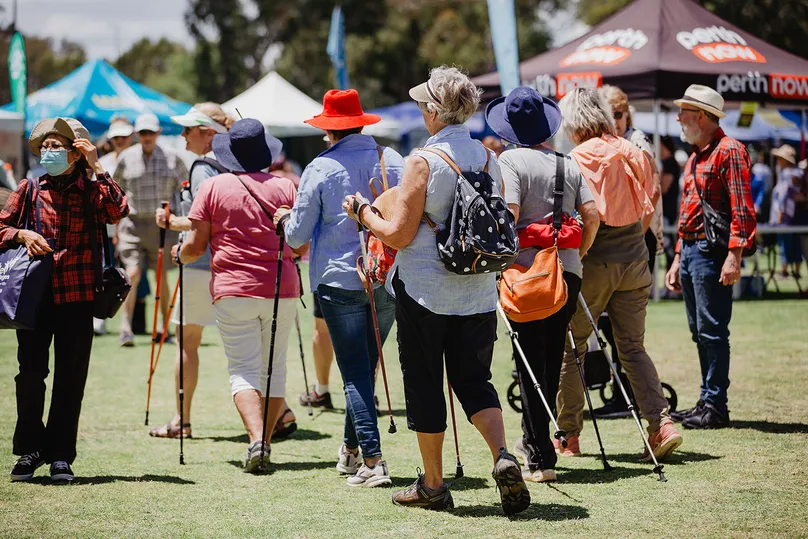
Regular walking can help you maintain a healthy lifestyle and remain independent.
Walking has many benefits for older adults
Walking is a gentle, low-impact way to add physical activity to your day. Just 30 minutes of daily walks can lower your risk of heart disease, stroke, and diabetes by 30-40%. It also helps maintain your strength and balance so you can live independently as you age.
The Australian Physical Activity and Sedentary Behaviour Guidelines recommend 30 minutes of moderately intense activity most days for people over 65.
For your daily dose of physical activity, you could:
Choose to walk at a steady pace
Have short walks throughout the day
Walk up and down hills and stairs
Every little bit helps!
Health benefits of walking
Walking every day can help you improve your overall health. The many benefits of walking include:
Improving your energy levels and increasing your stamina
How to start walking regularly
You can exercise regularly by finding a daily routine with walking that you enjoy. This will help you stick to your new healthy habit for the long-term.
You can start slow and build up. Go from short to long walks, weekly to daily walks, or leisurely strolling to brisk walking.
Here are some ways to make walking part of your routine:
Did you find this article useful?
Your feedback helps LiveUp to curate information that matters to you.
You might also be interested in these resources
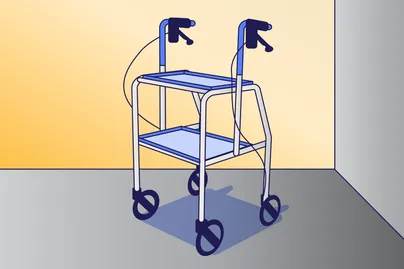
Walker with tray
A walker helps you balance or transport things around your home. It can reduce fall risk and be a handy helper around the home so you can do daily tasks with confidence.
Most moedls are height-adjustable with easily removeable trays for cleaning...
Walking around your local neighbourhood, along the coastline, or a walking trail
Taking your dog for a walk
Going for regular walks with friends, family, or carers
Walking around the house for 10 minutes first thing in the morning
Walking to see the sunrise or sunset to enjoy some beautiful scenery and fresh air
Joining a walking club to increase both your physical activity and social interaction
What do I need for walking?
Walking is a cost-effective way to stay active – no gym required!
However, there are a few things to check before you get started:
Health and wellbeing
If you have any health conditions or injuries, it is important to consult your doctor for advice. This is particularly important if you have not exercised for a while. If your doctor is concerned, ask if there are any alternative activities you could do. They can help you choose suitable activities to match your health and fitness needs. Or they may refer you to an exercise professional.
Support and safety
Using a walking stick, hiking poles, walking frame, or wheeled walker shouldn’t stop you from going for a walk. These assistive products help by:
Improving your balance
Lightening the load on your joints
Making it easier for you to move around
If you feel you need support and would benefit from an assistive walking product, see an allied health professional. They can help you find the right product for you and set it up properly.
Clothing and footwear
Ensure you wear the best suitable footwear for walking. Comfortable sneakers with proper arch support work well for most people. If you have issues with your feet or need specific footwear advice, talk to your doctor or podiatrist.
Stay safe while walking
Make sure to warm-up and gently stretch before your walk. Start walking slowly for the first 10 minutes or so before increasing to a faster speed. After your walk, take a few minutes to cool down and let your heart rate return to normal. Try a few gentle stretches before and after walking. Focus on moving the joints in your lower body. Add any movements that feel pleasant to your routine.
A good way to judge how fast to walk is to rate how you feel on a scale of 0-10, where 0 is resting and 10 is working extremely hard.
Want to feel the benefits without pushing yourself too hard? Your walking should be somewhere between a 3 (moderate) and 6 (somewhat hard). Stop if you need to. Pushing ahead when it’s not safe can cause injury.
Planning your walk
Take a mobile phone or personal alarm with you. Make sure the battery is fully charged so you can contact someone in an emergency.
Let a family member, friend, or neighbour know of your walking plan, how long it will take, and the route you're walking. Check in with them when you're home to let them know you're safe.
Checking the weather will make sure you don't get caught out and are wearing the right clothing for the conditions.
Have a backup plan in place in case walking home becomes too challenging. Consider where you can find a taxi or local public transport. Make sure you can buy a ticket or pay for a taxi home.
What if I use a walking aid?
Many people use assistive products to get around. Walking aids improve balance, increase stability, and assist with general weakness or injury. They provide safety by preventing falls. They improve independence by supporting you to move without the help of a carer or loved one.
Some common assistive products are explained in the following sections.
Important: Walking aids should be selected and used with professional advice. Consult an allied health professional to find the safest and most suitable option for your needs.
Walking sticks
A walking stick can support you if you have difficulty walking. Walking sticks are an excellent aid for stability and balance. They're also helpful for people recovering from surgery or injuries.
There are a few different types of walking sticks:
Single point walking sticks are the most common, usually made of wood or aluminium.
3-point or tripod walking sticks are suitable if you need extra support when walking.
4-point or quad sticks are ideal if you need more support with balance and stability.
Walking frames
A standard walking frame has four legs and is picked up and moved forward with each step. Although it is more tiring to use, it is a popular choice. This is because it provides extra stability thanks to its wide base of support.
Two-wheeled walking frames are helpful if you find lifting a standard walking frame too challenging. They're ideal for people who are confident with upper body strength. They can help you take some weight off your legs.
Rollator or wheeled walker
Rollators (or 4-wheeled walkers) provide support for people who experience minor balance challenges. They provide less assistance than more stable walkers. Their 4 wheels make them more manoeuvrable and faster to use. This also makes them better suited for people who can comfortably use the brakes.
Outdoor rollators have larger wheels for better durability. They can roll over obstacles.
Indoor rollators are lighter and more compact, making them ideal for home use. Many indoor models also include a tray for carrying food or drinks.
Where can I get help?
If you need advice or have any questions:
Talk to your doctor or local community health centre.
Your local council can provide information about walking tracks, groups, and parks.
The Heart Foundation website has personal walking plans and information about walking groups in your local area.
A physiotherapist can assess your mobility and prescribe the right type of walking aid for you.
A physiotherapist or exercise physiologist can make a walking program for you based on your health and medical history.
If you would like to find local walking groups, try the quick LiveUp quiz.
Get in touch with LiveUp
If you need more information to get started, get in touch with one of our helpful team on 1800 951 971.
LiveUp provides free information to help you make informed decisions about your health. This information is for general and educational purposes only, is not intended to provide a comprehensive guide, and does not replace medical advice. Everyone is different, so some of these tips may work better for you than others. You should use your own judgment and seek medical advice when applying this information to yourself, to determine if it is suitable in your circumstances. Your use of, or reliance on, this information is solely at your own risk. Independent Living Assessment Incorporated is not responsible or liable for any injury, loss, or damage caused as a result of your use of, or reliance on, this information.
Download and print this article:
You can print out the PDF and stick it to your fridge or file away the tips to revisit at a later time.
Read more Fitness articles
Did you enjoy this article? You may also like reading similar healthy ageing articles.