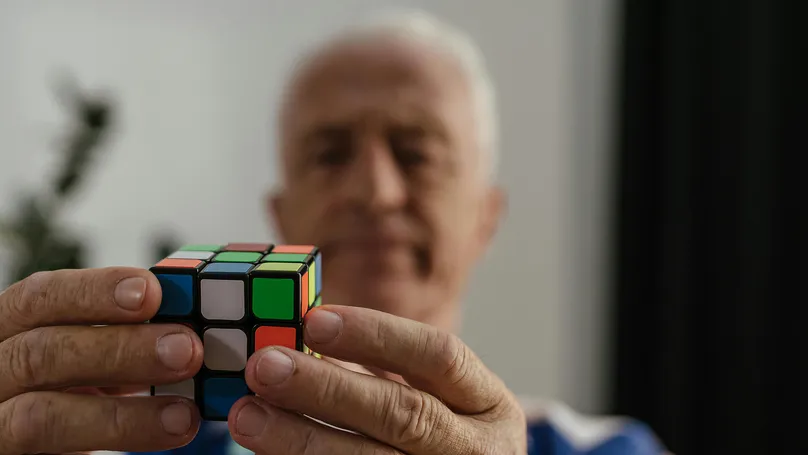
Discover simple, effective strategies to boost your memory. Keep your mind active every day to stay mentally alert.
Memory is one aspect of your brain health. It's also a skill that requires some maintenance.
You need to keep your brain healthy for it to function well. And to keep your brain healthy, you also need to look after your physical and mental health.
So, what can you do to look after your brain, body, mental health, and memory?
Practical tricks for remembering things
1. Write things down
It sounds obvious because it really helps!
Our brains have lots of storage space, but it's easiest to process a small amount of new information at a time. Writing things down helps keep your mind from getting overwhelmed.
Consider writing down your appointments, to-do lists, and important information. You can use calendars, diaries, or digital planners. This way, you don't have to remember everything in your head.
Writing things down also helps you remember them because it turns ideas into real notes you can see and use.
2. Review new information
Reviewing new information means engaging with it to build your understanding. Understanding something is a good way to remember it for longer.
If you review information soon after learning it, you strengthen your memory of it. Repeated review strengthens the pathways in your brain that store this memory.
Space out your reviews over time. This lets your brain practise recalling the memory and makes it easier to remember in different situations. All this review can then deepen your understanding of the memory and make it even stronger.
Example
Say your granddaughter tells you her favourite band and her favourite song by that band. Here's how you can periodically review this information:
Try to recall the name of the band, the song, and what the song is about.
Look it up or check your notes to see if you were right.
Listen to the song.
Do this review once every few days. Then do it once a week, then once every few weeks. Slowly space your reviews out more and more. These actions help strengthen the memory, making it easier to recall in the future.
3. Use mnemonic devices
Mnemonics are techniques that help you remember information more easily. For example:
Visualisation. Try creating mental images of what you want to remember.
Association. Try linking new information to knowledge you already have.
Did you find this article useful?
Your feedback helps LiveUp to curate information that matters to you.
You might also be interested in these resources
Brain health and dementia
Understand the causes and signs of cognitive decline and get practical tips to keep your brain healthy as you age.
You can make dancing part of your healthy ageing journey
Stay active and have fun with dance! Discover how dancing improves physical health, mental health and wellbeing, and social engagement for older adults.
Acronyms. Make abbreviations from the first letters of a series of words. This creates a memorable shorthand for new information.
Good mental health supports memory
4. Look after your mental health
Too much stress can overwhelm your mind. It can impair memory retrieval and affect how memories are formed.
You can manage stress by doing things you enjoy. This could mean going for walks, spending time with family, or working on your hobbies. Here are 5 more tips for reducing stress.
Various mental health conditions can also affect brain functions. Depression, anxiety, or sleep disorders can all impair memory. To combat this, seek mental health support when you need it.
5. Practise mindfulness
Mindfulness means focussing on your present feelings and environment without judgment. Studies suggest that mindfulness practices can improve brain functions. Working memory (a type of short-term memory) may be one of the most benefited areas.
For example, meditating (a mindfulness exercise) can help reduce stress and improve attention. Attention is an important part of storing new information. You can learn more about meditating with the Smiling Mind app. It's a free, evidence-based mindfulness toolkit.
You could also try chair yoga or Tai Chi. These are known as mindfulness body exercises. They help bring your focus to your body with deep breathing and controlled movements.
Example
Try this mindfulness meditation: Sit or lie down comfortably and focus on your breathing or something calming. If your mind wanders, gently return your attention to what you feel in your body. Set a timer and try it out for 5 or 10 minutes.
Exercise your brain
6. Stay mentally active
Challenging your brain is good for it. Especially if you challenge yourself with hard work you can enjoy. Puzzles, games, and learning new skills are good examples. These give your brain a workout, which helps it build pathways for sending information.
In turn, this helps you build up something called cognitive reserve. This is your brain's store of thinking abilities. The more reserve you have, the more resilient your mind is to age and to diseases such as dementia. So, having lots of cognitive reserve will help you maintain your memory skills as you get older.
Creative activities like writing, reading, painting, singing, and dancing are also great ways to start building your reserve. Your brain does a lot of exercise when you engage with the arts!
7. Stay socially active
Speaking with friends and meeting new people is also a good brain workout. Conversations require you to process speech, tone, facial expressions, body language, smells, and more, all at once.
Socialising is a comfort as much as it is a workout. Staying connected with your community helps you age well. Having a good social network can delay memory loss, lower your risk of dementia, and help you live longer.
Quantity and quality are both important. A wide and diverse social network exercises your brain. But supportive friends and family help you relieve stress, which is good for both your brain and body.
Good physical health supports memory
8. Stay physically active
Regular exercise reduces stress and pumps you full of feel-good hormones. It helps you manage and prevent chronic illnesses and disorders. These include diabetes, arthritis, high blood pressure, and insomnia.
Exercise also releases chemicals that encourage new growth of blood vessels and cells in your brain. That means improved brain function. Harvard Health Publishing says 6 months of moderate-intensity exercise can boost your memory and thinking skills.
Eating well benefits both your physical and mental health. This promotes optimal brain function and better memory.
Eat lots of fruit and vegetables, whole grains, lean proteins, and healthy fats. Berries, nuts, seeds, and fish rich in omega-3 fatty acids are especially good for brain health.
Be wary of over-the-counter supplements that claim to boost your memory. There's no solid proof that supplements work, according to Harvard Health Publishing.
10. Stay hydrated
Finally, be sure to drink enough water. This is good for your overall health, but also supports your memory. Dehydration can impair memory, mood, and other brain functions.
Try keeping a water bottle with you so you can drink whenever you feel thirsty. And consider having a drink of water after your coffee, as caffeine can dehydrate you. Here are some more tips for staying hydrated.
Try to drink alcohol in moderation as well. Over time, too much alcohol can impair your brain function and memory.
Need more info?
Everyone is different, so some of these tips may work better for you than others.
If you're concerned about your memory, keep a record of what's making you concerned for a couple weeks. You can take this 'symptom diary' to your doctor for assessment.
If you need more information about healthy ageing, get in touch with one of our helpful team members on 1800 951 971.
References
Dighriri, I. M., Alsubaie, A. M., Hakami, F. M., Hamithi, D. M., Alshekh, M. M., Khobrani, F. A., Dalak, F. E., Hakami, A. A., Alsueaadi, E. H., Alsaawi, L. S., Alshammari, S. F., Alqahtani, A. S., Alawi, I. A., Aljuaid, A. A., & Tawhari, M. Q. (2022). Effects of omega-3 polyunsaturated fatty acids on brain functions: A systematic review. Cureus, 14(10), e30091. https://doi.org/10.7759/cureus.30091
Kim, E. J., & Kim, J. J. (2023). Neurocognitive effects of stress: a metaparadigm perspective. Molecular Psychiatry, 28, 1-14. https://doi.org/10.1038/s41380-023-01986-4
Silva, Barha, C. K., Erickson, K. I., Kramer, A. F., & Liu-Ambrose, T. (2024). Physical exercise, cognition, and brain health in aging. Trends in Neurosciences, 47(6). https://doi.org/10.1016/j.tins.2024.04.004
Verhaeghen, P. (2021). Mindfulness as Attention Training: Meta-Analyses on the Links Between Attention Performance and Mindfulness Interventions, Long-Term Meditation Practice, and Trait Mindfulness. Mindfulness, 12. https://doi.org/10.1007/s12671-020-01532-1
Vila J. (2021). Social support and longevity: Meta-analysis-based evidence and psychobiological mechanisms. Frontiers in Psychology, 12, 717164. https://doi.org/10.3389/fpsyg.2021.717164
Whitfield, T., Barnhofer, T., Acabchuk, R., Cohen, A., Lee, M., Schlosser, M., Arenaza-Urquijo, E. M., Böttcher, A., Britton, W., Coll-Padros, N., Collette, F., Chételat, G., Dautricourt, S., Demnitz-King, H., Dumais, T., Klimecki, O., Meiberth, D., Moulinet, I., Müller, T., Parsons, E., … Marchant, N. L. (2022). The effect of mindfulness-based programs on cognitive function in adults: A systematic review and meta-analysis. Neuropsychology Review, 32(3), 677–702. https://doi.org/10.1007/s11065-021-09519-y
Yong, L., Liu, L., Ding, T., Yang, G., Su, H., Wang, J., Yang, M., & Chang, J. (2021). Evidence of effect of aerobic exercise on cognitive intervention in older adults with mild cognitive impairment. Frontiers in Psychiatry, 12, 713671. https://doi.org/10.3389/fpsyt.2021.713671
How to use this information
LiveUp provides free information to help you make informed decisions about your health. This information is for general and educational purposes only, is not intended to provide a comprehensive guide, and does not replace medical advice. Everyone is different, so some of these tips may work better for you than others. You should use your own judgment and seek medical advice when applying this information to yourself, to determine if it is suitable in your circumstances. Your use of, or reliance on, this information is solely at your own risk. Independent Living Assessment Incorporated is not responsible or liable for any injury, loss, or damage caused as a result of your use of, or reliance on, this information.
Download and print this article:
You can print out the PDF and stick it to your fridge or file away the tips to revisit at a later time.
Read more Memory articles
Did you enjoy this article? You may also like reading similar healthy ageing articles.