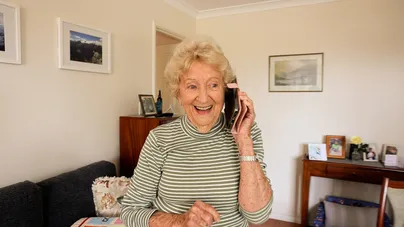
For healthy ageing, it’s vital for older people to stay socially connected. Here are tips for beating loneliness and isolation during heatwaves.
This article was written in collaboration with experts from Griffith University's Ethos Project.
You can take charge of your health in the hot weather. It’s important to do so, because heatwaves don’t just impact your physical health. They can affect your mental health too.
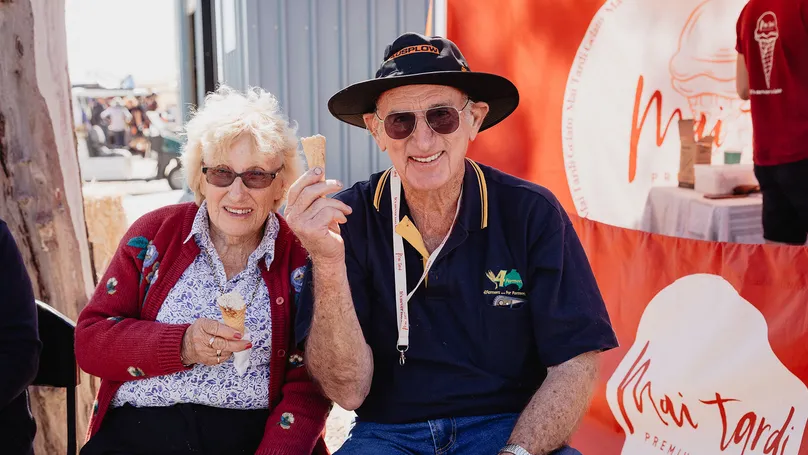
It's vital for older people to seek shelter from heatwaves. Thus, extreme weather may force you to skip regular activities and spend more time in your house.
Unfortunately, doing so can reduce your social interactions and sense of independence. This can negatively impact your mental health, increasing anxiety and loneliness.
Poor mental health can have a negative impact on your body and brain health, too. In fact, social networks are as important to your health as exercise and diet.
Here are some ways to look after yourself and stay connected, even during the hottest days of summer:
Do things you can enjoy inside. This can help you reduce stress while staying out of the heat. For example, you could read, paint, craft, or listen to music.
Reach out to family and friends through video calls, social media, or a simple phone call.
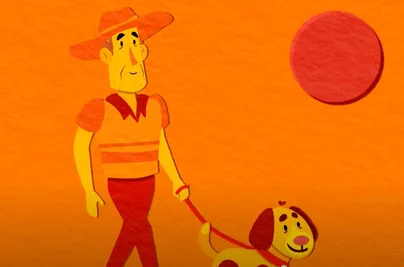
You can still go for your daily walk, but it’s best not to do this in the middle of the day. Shift outdoor activities to cooler times of the day, like early mornings or evenings, to avoid peak heat.
Many older people in Australia don’t identify heatwaves as a risk to their health. By sharing this article, you can help others stay safe and connected during hot weather.
Once you understand the risks of heat, you can take proactive steps to protect your health. You can stay safe, connected, and comfortable, without breaking your budget.
You can explore related articles for more tips here:
Learn more about staying safe in the heat at Griffith University’s Ethos Project.
Everyone is different so some of these tips may work better for you than others.
If you need more information, get in touch with one of our helpful team on 1800 951 971.
NSW Health. (2024, December). Who is at greater risk of heat-related health problems? https://www.health.nsw.gov.au/environment/beattheheat/Pages/people-most-at-risk.aspx
Franks, K. H., Summers, M. J., Vickers, J. C., & Tchaco, L. (2021, January). Association of stress with risk of dementia and mild cognitive impairment: A systematic review and meta-analysis. Journal of Alzheimer's Disease, 79(4), 1573–1590. https://doi.org/10.3233/JAD-210094
Yang, C. Y., Boen, C., Gerken, K., Li, T., Schorpp, K., & Harris, K. M. (2016). Social relationships and physiological determinants of longevity across the human life span. Proceedings of the National Academy of Sciences, 113(3), 578–583. https://doi.org/10.1073/pnas.1511085112
LiveUp provides free information to help you make informed decisions about your health. This information is for general and educational purposes only, is not intended to provide a comprehensive guide, and does not replace medical advice. Everyone is different, so some of these tips may work better for you than others. You should use your own judgment and seek medical advice when applying this information to yourself, to determine if it is suitable in your circumstances. Your use of, or reliance on, this information is solely at your own risk. Independent Living Assessment Incorporated is not responsible or liable for any injury, loss, or damage caused as a result of your use of, or reliance on, this information.
You can print out the PDF and stick it to your fridge or file away the tips to revisit at a later time.

Did you enjoy this article? You may also like reading similar healthy ageing articles.
See all Social articlesYour feedback helps LiveUp to curate information that matters to you.