Follow these tips for creating healthy habits when it comes to men's health.
It's no secret that men and women face different health challenges. Being a ‘tough guy’ puts more men in hospital, for longer. Research shows that men aged over 65 are in worse shape when it comes to every health condition that's not related to male or female anatomy.
Here are some healthy habits to help men age well.
Get a check up
Denial, delay, and hoping things come right is why men end up in hospital more than women.
Not knowing where to start is another barrier. However, since the COVID pandemic, telehealth has made the health system easier to use and more accessible for most people.
If you haven’t seen a doctor for a long time, do yourself a favour and book a telehealth appointment today.
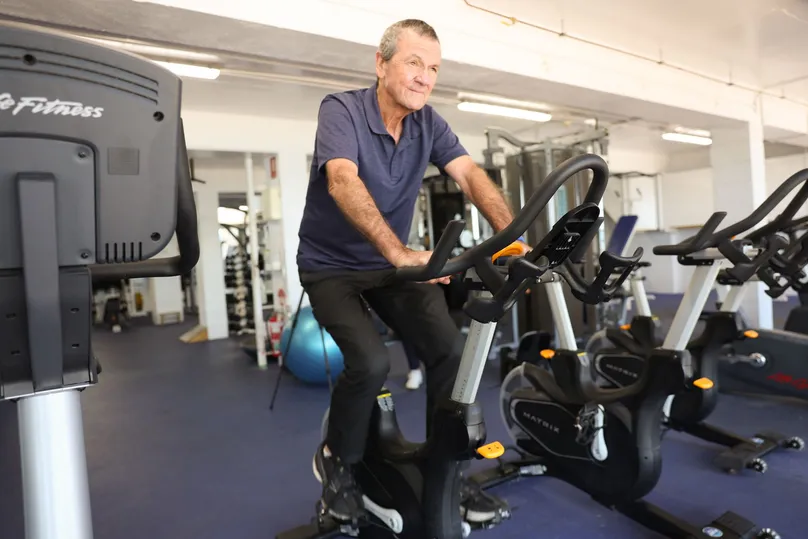
Prioritise exercise and maintain muscle
Many of us can make improvements when it comes to our diet, exercise, sleep and relaxation habits. Exercise, including muscle-strengthening exercises such as resistance training, can help improve your brain function and boost your mental health.
Maintaining muscle is more effective for strong bones than any supplement. Regular muscle activity also improves insulin resistance.
Being strong helps with balance as you age and can help to prevent falls.
Exercise lowers stress and anxiety, helping to improve your mood and quality of sleep.
Use it or lose it! Research shows that exercise improves your health even if started later in life. If you have any medical conditions such as diabetes, hypertension,
Did you find this article useful?
Your feedback helps LiveUp to curate information that matters to you.
You might also be interested in these resources
How to build healthy habits: 10 tips for making changes
Tips for building lasting healthy habits to improve your quality of life.
10 tips for healthy eyes: Essential advice for seniors
Discover 10 essential tips for maintaining healthy eyes, from regular checks to lifestyle changes, tailored for older adults to protect vision and prevent eye conditions.
, or heart disease, see your health professional before beginning a new exercise program.
Know you're not alone
More than 43% of Australian men report feelings of loneliness. However, there are many social clubs that welcome new members, and programs designed to help men connect with one another. Here are three popular organisations with community-based networks across Australia:
Australian Men’s Shed Association members come from all walks of life. It’s one of Australia’s largest male-based community development organisations.
The Men’s Table is a safe place to share and be heard in a confidential and non-judgemental environment.
The Tough Guy Book Club was built by guys who don’t read much. It’s about having real conversations with like-minded men.
Seek support
If you would like to speak to someone one-on-one, there are services available to you:
MensLine is a free telephone and online counselling service offering support for Australian men anywhere and at any time. Call 1300 78 99 78.
FriendLine supports anyone who’s feeling lonely or just wants a chat from 8am–6pm, 7 days a week. FriendLine is not a crisis service, but conversations are anonymous, and their friendly volunteers are ready for a yarn. Call 1800 424 287.
BeyondBlue is a mental health support service that connects you to a person to talk to on those days when something isn’t quite right, or things just seem too much. You can chat to a counsellor online or call 1300 22 4636.
Open Arms Veterans and Families Counselling provides free and confidential counselling to anyone who has served at least one day in the Australian Defence Force. They also provide counselling for partners and families. Open Arms can be contacted 24/7 and all their counselling is arranged by calling 1800 011 046.
LifeLine’s crisis support service is available 24/7. Anyone in Australia can speak to a trained Crisis Supporter over the phone, any time of the day or night. Call 13 11 14 or text 0477 131 114.
Volunteering regularly gives retirement structure and purpose. It’s work on your terms, and you get the satisfaction of having a role in an organisation.
There are voluntary positions all over Australia. Find something that matches what you’re interested in. This is a good way of meeting and mixing with like-minded people.
Search GoVolunteer the Volunteering Australia database or visit your local volunteering organisation, library or resource centre for help finding the right thing for you to do.
It’s never too late
Perhaps you got used to bouncing back when you were younger, and now it’s different. Perhaps you’re looking after someone else who needs you to be the strong and healthy one.
The good news is it’s never too late to change, and the fastest road to better health is to swap one bad habit with a new healthy habit. You can start with just one habit and build up gradually.
Change one habit
It’s hard to stop doing something. It’s much easier to start doing something new. This is why it’s helpful to think about habits as only one part of a three-step process:
A trigger or reason
A routine (the habit)
A reward (the pleasure we get from the habit)
Think about what triggers the habit you want to change. Whenever you can, stay away from what triggers your old habit. When you cannot avoid a trigger, swap your old habit with a new healthy one and then follow-up with a new healthier reward. After breaking one habit, you have a better chance of also breaking the flow-on routine. This is why it's easier to change other unhealthy habits after learning one new one.
More helpful information
If you need more information, take the LiveUp quiz or get in touch with one of our helpful team on 1800 951 971.
You can find more of LiveUp's tips for creating healthy habits here.
Find more tips and advice by following the links below:
Healthy Male: Evidence-based, easy-to-understand information on male health in Australia.
James, S., Chiou, Y., Fatih, N., et al. (2023). Timing of physical activity across adulthood on later-life cognition: 30 years follow-up in the 1946 British birth cohort. Journal of Neurology, Neurosurgery & Psychiatry, 94(5), 349-356. https://jnnp.bmj.com/content/94/5/349
Singh, B., Olds, T., Curtis, R., et al. (2023). Effectiveness of physical activity interventions for improving depression, anxiety and distress: An overview of systematic reviews. British Journal of Sports Medicine. Advance online publication. https://bjsm.bmj.com/content/57/18/1203
Swami, N., Prattley, J., Bandara, D., Howell, L., Silbert, M., Renda, J., Rowland, B., & Quinn, B. (2022). Ten to Men: The Australian Longitudinal Study on Male Health: Waves 1–3. The Australian Economic Review, 55(2), 155-165. https://doi.org/10.1111/1467-8462.12453
LiveUp provides free information to help you make informed decisions about your health. This information is for general and educational purposes only, is not intended to provide a comprehensive guide, and does not replace medical advice. Everyone is different, so some of these tips may work better for you than others. You should use your own judgment and seek medical advice when applying this information to yourself, to determine if it is suitable in your circumstances. Your use of, or reliance on, this information is solely at your own risk. Independent Living Assessment Incorporated is not responsible or liable for any injury, loss, or damage caused as a result of your use of, or reliance on, this information.
Download and print this article:
You can print out the PDF and stick it to your fridge or file away the tips to revisit at a later time.
Read more Maintain my health articles
Did you enjoy this article? You may also like reading similar healthy ageing articles.